
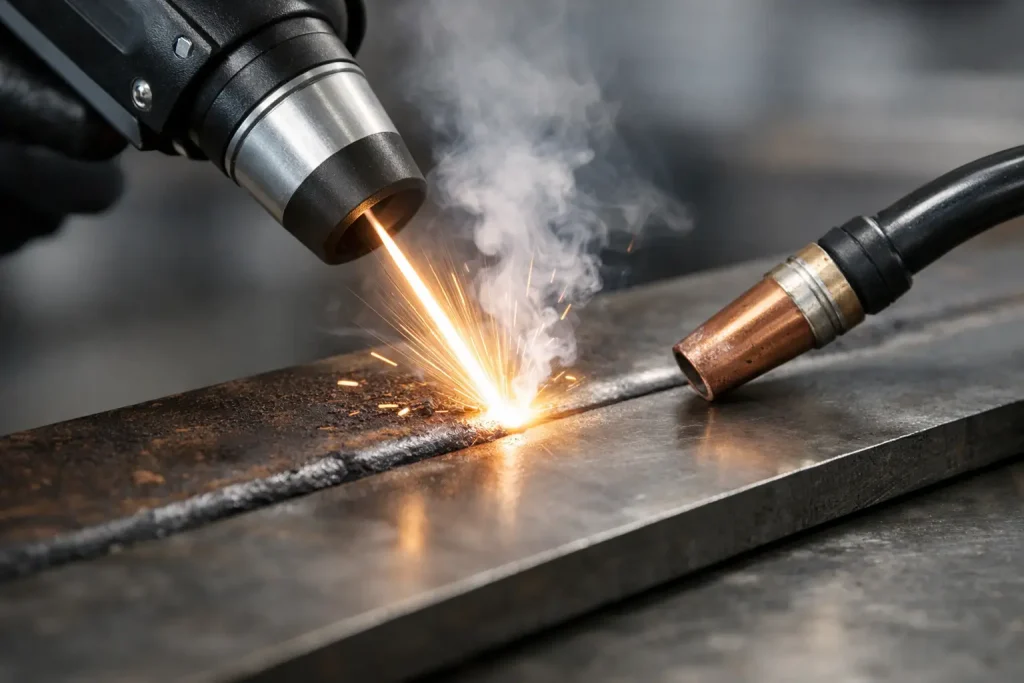
A weld can fail before the arc even starts. In many fabrication, maintenance, and repair jobs, the real problem is not the welding process itself – it is the oxide layer, heat tint, corrosion, or embedded contamination sitting on the surface. That is where laser oxide removal welding becomes valuable. By removing oxides with controlled laser ablation before or after welding, teams can improve weld consistency, protect the base material, and reduce the extra cleanup that slows projects down.
For plant managers, contractors, and asset integrity teams, this matters because surface condition directly affects weld quality, inspection results, and turnaround time. If the cleaning method is too aggressive, it can alter the profile or damage sensitive material. If it is too slow or messy, it adds downtime, containment requirements, and waste handling. Laser cleaning changes that equation.
What laser oxide removal welding actually means
In practical terms, laser oxide removal welding refers to using laser cleaning technology to remove surface oxides, corrosion products, heat tint, and similar contaminants from areas that will be welded or have already been welded. The laser is tuned to ablate unwanted surface material while leaving the underlying substrate intact.
This is especially useful on stainless steel, aluminum, carbon steel, and specialty alloys where oxide layers can interfere with weld penetration, arc stability, filler adhesion, or final appearance. In post-weld applications, laser cleaning can also remove discoloration and oxide films from the heat-affected zone without the residue associated with chemicals or the roughness caused by abrasive methods.
The key advantage is control. Unlike blasting or grinding, laser cleaning is selective. It can target contamination in a defined area, including tight weld seams, edges, corners, and localized repair zones.
Why oxide removal matters before and after welding
Oxides are not all the same, and that is where many cleaning decisions go wrong. A light oxide film on stainless behaves differently from heavy corrosion on carbon steel. Aluminum forms oxide almost immediately when exposed to air, and that oxide has a much higher melting point than the base metal. If it is not properly managed, welding becomes less predictable.
Before welding, oxide removal helps create a cleaner, more stable surface. That can improve fusion, reduce the risk of inclusions, and support more consistent bead quality. In operations where inspection standards are tight, surface cleanliness also helps reduce avoidable rework.
After welding, removing heat tint and oxide scale is often necessary for corrosion performance, especially on stainless steel. If post-weld oxides remain in place, the material may be more vulnerable to localized corrosion. For visible applications, there is also the issue of finish quality. A cleaner weld area supports both performance and appearance.
Where laser cleaning fits better than traditional methods
Mechanical cleaning still has a place. Grinding, wire brushing, and blasting are familiar, widely available, and sometimes cost-effective for broad, less sensitive areas. Chemical pickling can also be effective in some controlled environments. But each method comes with trade-offs.
Grinding can remove more than the oxide layer, especially around weld prep zones where dimensional control matters. Blasting creates media waste, dust, and containment demands. Chemicals introduce handling requirements, disposal concerns, and extra process controls. In active facilities, those issues can affect scheduling as much as the cleaning itself.
Laser oxide removal welding is often the better choice when the job calls for precision, low secondary waste, and minimal impact on the substrate. It is particularly useful when teams need to clean localized weld zones without setting up large blasting enclosures or introducing contamination into sensitive areas.
That does not mean laser cleaning is the answer to every surface condition. If the area is extremely large and the tolerance for surface change is high, another method may still make sense. The right decision depends on material type, contamination thickness, access, finish requirements, and shutdown constraints.
How the process works in the field
A laser cleaning system emits short, high-energy pulses onto the contaminated surface. The oxide or coating absorbs the energy differently than the base material, allowing the unwanted layer to be removed in a controlled way. Parameters are adjusted based on the substrate and the type of contamination.
In a welding context, this might mean cleaning a seam area before fabrication, preparing a repair zone on installed equipment, or treating a post-weld area to remove heat tint and oxidation. Because the process is highly localized, operators can work close to critical features without the broad material loss associated with aggressive mechanical methods.
For field operations, that precision has operational value. Teams can prepare weld areas on structural steel, piping, tanks, and fabricated components with less cleanup around the work zone. There is also a safety and environmental benefit – no blasting media, no chemical runoff, and far less secondary waste to collect and dispose of.
Laser oxide removal welding for common materials
Stainless steel
Stainless steel often needs oxide removal both before and after welding. Surface contamination can affect weld cleanliness, while post-weld heat tint can reduce corrosion resistance if left untreated. Laser cleaning is well suited here because it can remove discoloration and oxide films without gouging or smearing the surface.
Aluminum
Aluminum welding is especially sensitive to oxide layers. Since aluminum oxide melts at a much higher temperature than the base metal, proper cleaning is essential for stable welding. Laser cleaning can prepare the surface without the embedded residue that may come from abrasive tools.
Carbon steel
For carbon steel, the issue is often rust, mill scale, or oxidation in maintenance and repair settings. Laser cleaning can strip those layers from weld zones while preserving the underlying profile. That is useful when teams are dealing with corrosion removal and weld prep in the same operation.
Specialty alloys and sensitive components
On higher-value materials or components with tight tolerances, substrate protection becomes the priority. Laser cleaning gives operators a way to remove oxides selectively where traditional methods may be too coarse.
The operational benefits decision-makers care about
From a project standpoint, weld-area cleaning is not just a quality issue. It affects downtime, labor hours, inspection outcomes, and waste handling. That is why laser cleaning continues to gain traction in fabrication and maintenance environments.
The first benefit is reduced rework. Cleaner weld zones generally support more predictable welding and better final results. The second is substrate protection. When the cleaning method removes only what needs to go, there is less risk of damaging the parent metal or altering critical geometry.
The third is easier site management. Laser cleaning reduces the mess associated with blasting and avoids the disposal burden tied to chemical cleaning. In congested or operational facilities, simpler setup can make a real difference to turnaround planning.
For organizations with sustainability targets, there is another advantage. A process that avoids consumable blasting media and hazardous chemical waste aligns better with current environmental expectations without sacrificing performance.
What to consider before specifying laser cleaning
Not every oxide layer requires the same laser settings, and not every weld job should be approached the same way. Material type, oxide thickness, required finish, and access conditions all influence the cleaning plan.
If the goal is weld preparation, the process should be aligned with the welding procedure and inspection requirements. If the goal is post-weld restoration, the finish and corrosion expectations matter more. In both cases, it helps to work with a service partner that understands not just laser operation, but also how weld zones behave in real industrial conditions.
This is where field experience matters. A controlled laser process is only as effective as the judgment behind it. In sectors such as oil and gas, infrastructure maintenance, and construction, cleaning is rarely performed in ideal shop conditions. Access is tighter, shutdown windows are shorter, and the consequences of substrate damage are higher.
That is why service-led support often delivers better results than treating laser cleaning as a generic rental tool. BKR Engineering has built its reputation on that kind of precision work – helping clients remove oxides, corrosion, and surface contamination without creating new problems in the process.
Laser oxide removal welding is not about replacing every traditional cleaning method. It is about using a more precise option when weld quality, asset protection, and operational efficiency all matter at once. If your cleaning method is adding damage, waste, or delays before the welding even begins, that is usually the first process worth changing.