
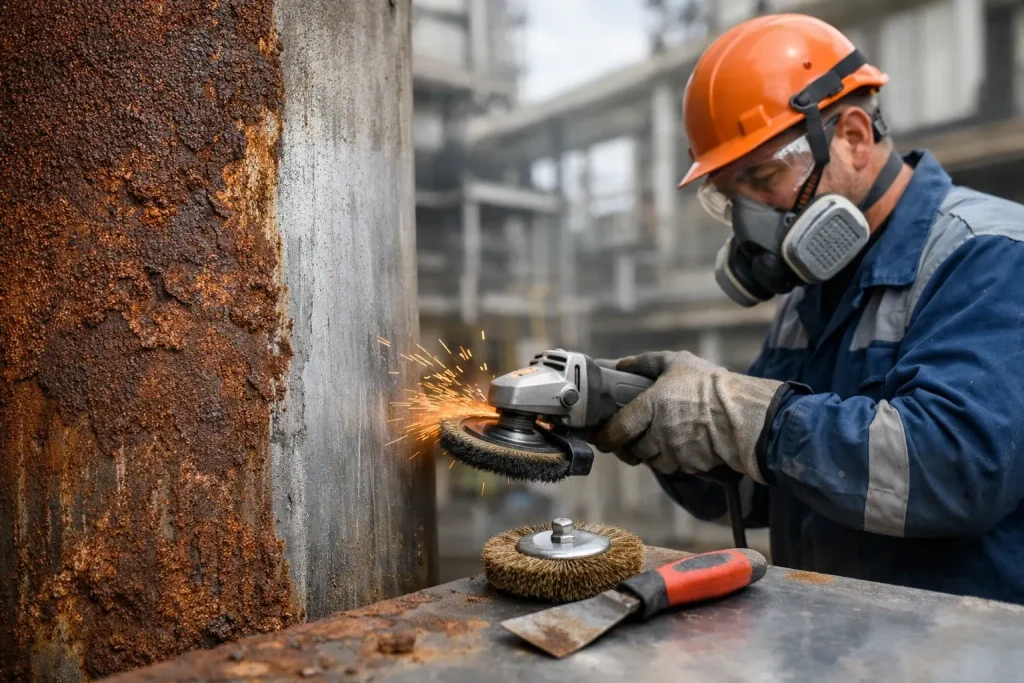
When corrosion shows up on pipe racks, structural steel, tanks, marine components, or heritage metalwork, the real cost is rarely just the rust itself. It is the shutdown window, the risk of damaging base material during cleaning, the waste stream that follows, and the question every asset owner has to answer – how do we remove contamination thoroughly without creating a new problem? That is why industrial rust removal Singapore projects increasingly demand more control than abrasive blasting or chemical stripping can offer.
In Singapore, surface treatment decisions are shaped by tight maintenance schedules, strict safety expectations, environmental controls, and the practical realities of working in live facilities. For plant managers, contractors, and asset integrity teams, rust removal is not a cosmetic task. It is part of keeping equipment reliable, preparing surfaces for inspection or recoating, and extending the service life of high-value assets.
What industrial rust removal in Singapore actually needs to solve
Rust removal in an industrial setting has to do more than make a surface look clean. The process must remove corrosion products effectively, preserve the substrate, and fit the operational environment. That balance matters whether the work is happening in an oil and gas facility, fabrication yard, commercial property, or restoration project.
Traditional methods still have their place, but they come with trade-offs. Abrasive blasting can be effective on heavy corrosion, yet it often requires containment, extensive cleanup, and careful management to avoid damaging the underlying surface. Chemical methods can reach complex areas, but disposal requirements, operator exposure, and residue management add time and cost. Mechanical tools are familiar and accessible, though consistency can vary and labor demands rise quickly on larger jobs.
That is why a more selective approach is gaining attention. In many cases, the question is no longer whether rust can be removed. It is whether it can be removed precisely, safely, and with less disruption to the surrounding operation.
Why laser cleaning changes the industrial rust removal Singapore conversation
Laser cleaning uses controlled laser ablation to remove rust, oxides, coatings, oil, grease, and other surface contaminants from a material without aggressive contact with the substrate. For industrial maintenance teams, the operational value is straightforward. You get targeted removal with a much lower risk of base metal loss, and you avoid many of the secondary problems created by blasting media or chemical waste.
That matters on machined parts, weld zones, fabricated assemblies, and surfaces where dimensional integrity is important. It also matters where cleanup and containment can turn a simple maintenance task into a larger shutdown event. Because laser cleaning does not rely on abrasive media, there is less mess to control and less post-job disposal to manage.
The visual result is another practical advantage. Laser cleaning gives operators and clients a clear view of what has been removed and what remains, which is especially useful during inspection preparation, restoration work, and projects where selective cleaning is required rather than full-surface stripping.
Where laser rust removal makes the most sense
Not every corrosion job is identical, and the right method depends on surface condition, access, material type, and project objectives. Laser cleaning is especially well suited when precision matters more than brute force.
For maintenance teams, that includes localized rust removal on steel structures, equipment housings, flanges, supports, and process components. For fabrication and construction contractors, it can support weld preparation, coating removal, and cleaning before further processing. In asset integrity programs, it can expose the surface for inspection without unnecessarily roughening or thinning the substrate.
It is also highly relevant in restoration settings. Heritage features, architectural metal elements, and delicate components often cannot tolerate aggressive blasting. A controlled method gives project teams a way to remove corrosion while preserving the character and integrity of the original material.
There are limits, and that is part of making a sound decision. Very heavy, deeply layered corrosion over large open areas may still require a different or combined approach depending on schedule and cost parameters. The best industrial rust removal strategy is not about forcing one method onto every surface. It is about choosing the method that fits the asset, the access conditions, and the performance requirement.
How to evaluate an industrial rust removal provider in Singapore
The technology matters, but service execution matters just as much. In practice, industrial rust removal is won or lost on planning, field control, and the provider’s ability to work around operational constraints.
Start with technical fit. A capable provider should be able to assess the substrate, the corrosion level, the surrounding environment, and the required finish. That includes understanding whether the goal is full rust removal, selective spot cleaning, inspection preparation, coating removal, or a combination of tasks.
Next is operational planning. In live industrial environments, access, permit requirements, neighboring equipment, and shutdown timing shape the method selection. A provider with real project experience will account for these early, rather than treating them as site issues to solve later.
Safety and environmental control are also central. One of the strongest arguments for laser cleaning is the reduction in secondary waste and the avoidance of chemical disposal issues. But that benefit only delivers value when the work is carried out with disciplined site practices and clear communication.
This is where specialist experience stands out. A company such as BKR Engineering brings value not just through the equipment itself, but through the ability to apply laser cleaning in construction, oil and gas, and maintenance environments where precision and reliability are non-negotiable.
Cost is not just the cleaning method
Procurement teams often compare rust removal options by line-item price, but that is only part of the cost picture. The true comparison includes setup requirements, downtime, containment needs, waste handling, rework risk, and potential substrate damage.
A method that looks cheaper on paper can become more expensive when it extends outage duration or creates follow-on repair work. This is especially true on high-value assets where surface damage affects coating performance, component life, or inspection confidence. Precision cleaning often delivers its value by avoiding those hidden costs.
In Singapore, where labor, site controls, and operational interruptions carry real commercial weight, faster cleanup and reduced process disruption can materially improve project economics. That is why decision-makers increasingly look at total job impact rather than only hourly rate.
What good project outcomes look like
A successful rust removal project should leave more than a cleaner surface. It should support the next maintenance step, whether that is inspection, recoating, repair, or return to service. The surface should be appropriately prepared, the surrounding work area should remain manageable, and the project should finish without introducing avoidable delays.
For plant operators, that means less interruption and better control over maintenance windows. For contractors, it means a cleaner handoff to coating or fabrication stages. For property and restoration stakeholders, it means visible improvement without unnecessary material loss.
The strongest providers understand this broader outcome. They do not sell surface cleaning as an isolated activity. They treat it as part of asset care, production support, and long-term maintenance performance.
Choosing the right path for industrial rust removal Singapore projects
If your site is dealing with corrosion on equipment, steelwork, fabricated parts, or sensitive surfaces, the right question is not simply how fast rust can be removed. It is how accurately the work can be done, how much disruption it creates, and what condition the asset will be in afterward.
That is why laser cleaning continues to earn attention across industrial rust removal Singapore applications. It offers a practical answer to the problems many maintenance teams are trying to reduce at the same time – substrate damage, cleanup burden, chemical waste, and avoidable downtime.
The best results come from matching method to application, then working with a specialist who understands both the technology and the realities of the site. When that happens, rust removal stops being a reactive fix and becomes a more controlled part of protecting asset value.