
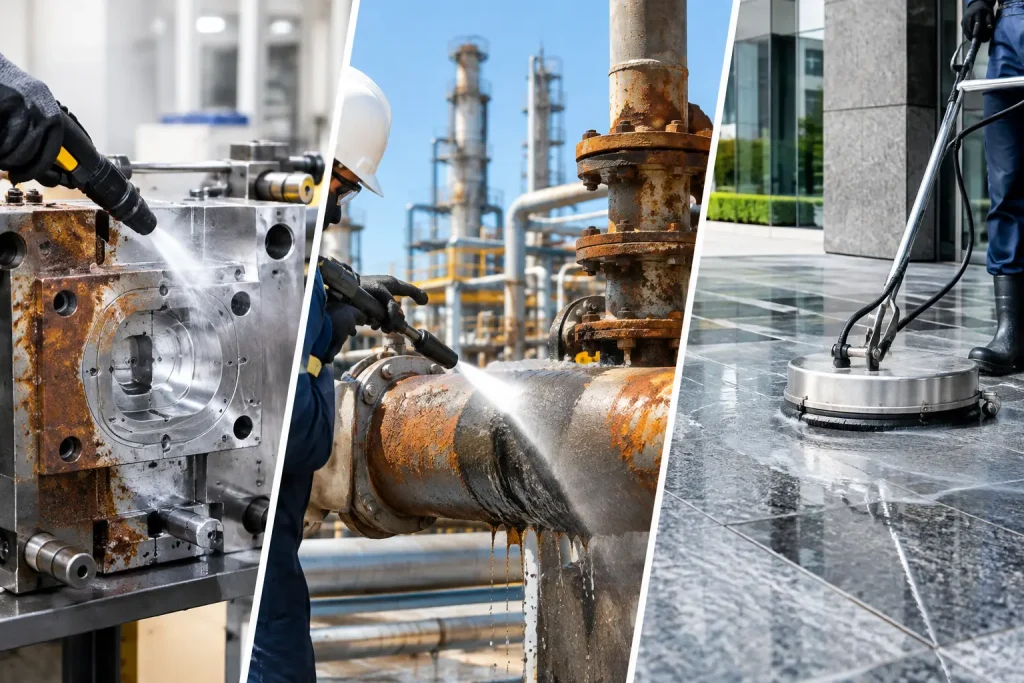
A rusted pump housing, gearbox, valve assembly, or steel frame is rarely just a cosmetic issue. Corrosion can conceal pitting, compromise coating adhesion, obstruct inspection, and turn a planned maintenance task into a longer shutdown. Knowing how to clean rusted machinery starts with one practical rule: remove the corrosion without removing sound metal or creating a larger cleanup problem.
The right method depends on the asset’s material, condition, geometry, operating environment, and next maintenance step. A heavily corroded carbon-steel support does not require the same treatment as a machined shaft, a nameplate, a heritage metal feature, or equipment positioned beside sensitive instruments. Surface preparation should be selected for the job, not applied as a one-size-fits-all process.
Assess the Rust Before Cleaning
Before choosing a cleaning method, determine whether the rust is limited to the surface or whether it has caused measurable material loss. Light flash rust may be removed quickly. Thick scale, deep pits, flaking corrosion, or corrosion around welds and fasteners may require an engineering assessment before cleaning begins.
Start by identifying the base material. Carbon steel, stainless steel, cast iron, aluminum, copper alloys, and plated surfaces each react differently to abrasion, chemicals, moisture, and heat. Stainless steel, for example, can be contaminated by tools previously used on carbon steel. Aluminum can be damaged by aggressive alkaline or acidic products. Older machinery may also have coatings or residues that require controlled handling.
The equipment’s role matters as much as its appearance. If the work is intended to prepare a surface for repainting, the required cleanliness and surface profile may differ from work performed for visual restoration or non-destructive testing. When rust is removed to inspect a weld, bearing seat, flange face, or serial marking, preserving the underlying surface is usually the priority.
Document the condition before work starts. Photographs, corrosion mapping, and notes on affected locations help maintenance teams compare results, plan repairs, and identify recurring moisture or contamination sources.
Choose the Right Way to Clean Rusted Machinery
Mechanical abrasion, chemical treatment, and laser cleaning can all remove rust. The best choice is based on substrate sensitivity, containment needs, access, production constraints, and the quality of finish required afterward.
Mechanical cleaning for accessible, tolerant surfaces
Wire brushes, abrasive pads, needle scalers, grinders, and blasting media are familiar options for large, durable steel structures. They can be effective where material removal is acceptable and the work area supports dust control, containment, and post-cleanup.
The trade-off is that abrasive methods are not selective. They can roughen the substrate, round edges, alter fine details, drive contaminants into the surface, or remove more material than intended. Blasting also produces spent media and debris that must be collected and disposed of correctly. On machinery with close tolerances, electrical components, seals, or nearby operating equipment, the setup can become more complex than the cleaning itself.
Mechanical methods are often suitable for broad corrosion on non-critical structural steel. They are less suitable when the objective is to expose intact metal precisely, preserve a machined finish, or work in a restricted area with minimal secondary waste.
Chemical rust removal for specific controlled applications
Acid-based rust removers, chelating agents, and conversion products can be useful for small components or shapes that are difficult to reach mechanically. Some formulations dissolve iron oxide effectively, but they demand careful control of concentration, dwell time, temperature, rinsing, and neutralization.
Chemical cleaning introduces several operational concerns. Residue left in crevices can cause later corrosion or interfere with coatings. Rinsing creates liquid waste, and some products can attack the base metal if misused. Chemical selection must also account for worker exposure, drainage control, ventilation, and compatibility with adjacent materials.
For removable parts cleaned in a controlled workshop environment, chemicals may be appropriate. For installed machinery, especially in plants where runoff, disposal, or access is constrained, the wider cost and risk profile should be considered before proceeding.
Laser cleaning for precise surface preparation
Laser cleaning uses controlled laser energy to ablate rust, oxides, paint, oil, grease, and other contaminants from a surface. The process can be adjusted to target the unwanted layer while protecting the underlying substrate, making it particularly effective for high-value assets and sensitive maintenance tasks.
Unlike blasting, laser cleaning does not rely on abrasive media. Unlike chemical cleaning, it does not create a chemical wash process or hazardous liquid waste stream. The removed material is captured as particulate through appropriate fume extraction, helping keep the work zone cleaner and reducing secondary cleanup.
This level of control is valuable for machinery components with complex geometry, welds, edges, identification plates, precision surfaces, and areas near other equipment. It also produces a highly visible result: rust is removed in defined passes, exposing the true condition of the metal beneath. That visibility helps asset integrity teams distinguish surface corrosion from pitting, cracking, coating failure, or other defects that require repair.
BKR Engineering applies controlled laser ablation for projects where precision, reduced downtime, and substrate protection are central to the maintenance plan.
Prepare the Work Area Before Removing Rust
Good surface cleaning begins with preparation. Isolate the equipment if necessary, confirm that stored energy has been managed, and protect components that should not be exposed to the selected process. Bearings, seals, sensors, cable entries, polished surfaces, and open process connections may need masking or physical protection.
Remove loose dirt, mud, oil, and grease first. Rust removal is more effective when heavy contamination is not shielding the corroded surface. For oily machinery, use a compatible degreasing step and allow the area to dry fully before further treatment. Cleaning rust over oil can spread contamination and reduce coating adhesion later.
The work area should also be evaluated for access and containment. Tight plant spaces, elevated platforms, enclosed rooms, and live-adjacent equipment change the method that can be used safely. A process that is efficient in an open fabrication yard may be impractical inside an operating facility.
Clean in Controlled Stages, Not One Aggressive Pass
Whether using hand tools, chemicals, or laser ablation, begin with a small test area. The test confirms that the cleaning method removes corrosion at the required rate without damaging the substrate or leaving unacceptable residues. It also provides a clear reference for the expected finish.
Work progressively from light cleaning to more intensive treatment only where needed. This approach is especially important on older equipment, thin sections, cast surfaces, and components with unknown repair history. Removing every trace of discoloration is not always necessary, and it can be counterproductive if the result is excessive metal loss.
For laser cleaning, process settings should be matched to the contamination layer and substrate. Rust thickness, coating type, component geometry, and desired finish influence the appropriate parameters. Trained operators use controlled passes to remove the oxide layer while maintaining the integrity of the base metal.
After cleaning, inspect the surface under adequate lighting. Look for remaining corrosion in pits, crevices, thread roots, weld toes, and joints. Cleaning may expose defects that were previously hidden. That is a maintenance advantage, but it also means the team should allow time for inspection and potential corrective work before returning equipment to service.
Protect the Cleaned Surface Quickly
Freshly cleaned steel can begin oxidizing again quickly in humid or contaminated environments. The interval between cleaning and protection should therefore be as short as practical. If coating is planned, confirm that the surface preparation meets the coating manufacturer’s requirements for cleanliness, profile, and environmental conditions.
Protection may involve primer and topcoat systems, corrosion inhibitors, oiling for stored parts, or reassembly in a controlled environment. The correct option depends on the asset’s service conditions. Outdoor infrastructure, marine-adjacent equipment, process plants, and air-conditioned facilities all present different corrosion risks.
Do not coat over moisture, dust, salts, or residual cleaning material. A coating can look acceptable immediately after application yet fail prematurely if the substrate was not properly prepared. For critical assets, document the cleaned condition and environmental readings before applying protection.
Prevent Rust From Returning
Cleaning removes the symptom. Long-term corrosion control requires attention to the cause. Water ingress, condensation, leaking seals, damaged coatings, poor drainage, chloride exposure, incompatible metals, and infrequent inspection are common contributors.
Maintenance teams can reduce repeat work by correcting leaks, improving ventilation or drainage, repairing failed coatings, and scheduling inspections before corrosion becomes heavy scale. Equipment stored outdoors or in humid areas benefits from routine cleaning and protective maintenance rather than waiting for rust to become a restoration project.
For high-value machinery, the most cost-effective approach is usually not the fastest-looking cleanup. It is the method that gives the team a clean, inspectable surface while preserving the asset, controlling waste, and supporting reliable protection afterward. When corrosion is approached as a surface-preparation and asset-integrity task, the cleaned machinery is better positioned for safe service, accurate inspection, and a longer working life.