
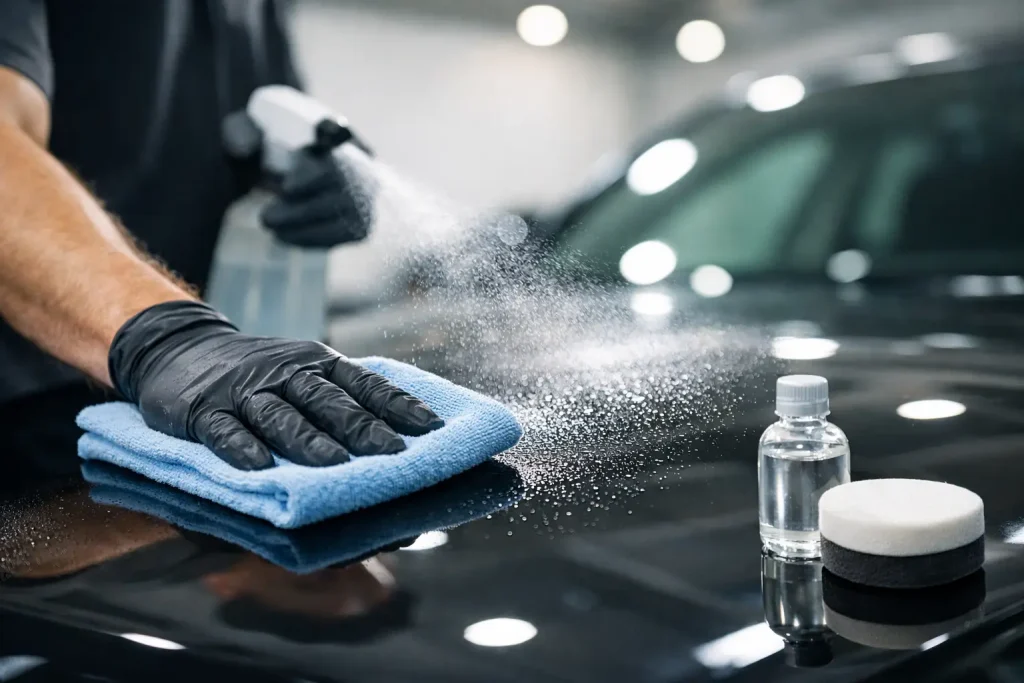
A coating can fail long before it sees service. The usual cause is not the coating itself, but what remained on the surface beneath it: invisible oil, soluble salts, oxidation, dust, or residue from a previous repair. Cleaning before coating application is the point at which asset owners either protect a coating system’s expected life or introduce the conditions for early blistering, peeling, and corrosion.
For plant managers, contractors, and asset integrity teams, surface preparation is not a cosmetic task. It is a controlled process that must match the substrate, the coating specification, the operating environment, and the practical limits of the work site. The goal is simple: create a clean, stable surface that allows the coating to bond as intended without removing sound base material or creating unnecessary downtime.
Why surface cleanliness determines coating life
Coatings adhere through a combination of mechanical anchoring and chemical interaction. Both are compromised when contaminants separate the coating from the substrate. A surface may look clean to the eye while still carrying a thin film of oil, moisture, chloride salts, oxidation, or handling residue. Once coated, those contaminants can attract moisture, interfere with curing, or become a starting point for underfilm corrosion.
The consequences often appear at the most expensive time: after scaffolding has been removed, a vessel has returned to service, or a building façade has been handed over. Localized coating delamination then becomes a larger maintenance issue because the failure can spread beneath apparently intact paint.
Cleaning requirements therefore depend on more than whether rust is visible. The coating manufacturer’s data sheet, project specification, substrate condition, and exposure category all matter. A structural steel member in a sheltered interior requires a different preparation approach than piping exposed to marine air, chemical vapors, frequent washdown, or elevated temperatures.
Cleaning before coating application: identify what must be removed
A proper assessment begins with the surface condition, not the cleaning tool. Operators should identify the type and extent of contamination, along with any areas where the substrate is thin, damaged, heat-sensitive, or historically significant.
Common contaminants include rust and mill scale, old paint, weld oxides, grease, cutting fluids, dust, fingerprints, and water-soluble salts. These materials do not behave the same way. Grease may smear during mechanical cleaning. Salts can remain after visible corrosion has been removed. Thick paint can conceal pitting, weld defects, or prior patch repairs that need inspection before recoating.
Surface profile is another consideration. Many protective coating systems require a defined anchor pattern to achieve mechanical adhesion. Removing contaminants alone may not be enough if the specification calls for a particular profile. Conversely, aggressive abrasive methods can create more profile than a thin-film coating can adequately cover, leaving peaks exposed and vulnerable to early corrosion.
The practical question is not, “What is the fastest way to make this look clean?” It is, “What preparation condition does this coating system require, and how can it be achieved without introducing damage or operational risk?”
The sequence matters as much as the method
A reliable preparation process follows a disciplined order. First, remove oil, grease, and other loose residues that could spread across the surface during later cleaning. Next, remove corrosion products, failing coatings, oxides, or tenacious contamination. Inspect the exposed substrate, then verify that it meets the required cleanliness and profile before applying the primer or coating.
Timing is critical after cleaning. Bare metal can begin to flash rust quickly in humid conditions, especially where condensation, salt exposure, or temperature changes are present. The coating should be applied within the specified window, with surface temperature and dew point checked as required. If the surface sits too long, it may need to be re-cleaned even if it still appears acceptable.
Handling controls also matter. Clean steel should not be touched with bare hands or placed where airborne dust, overspray, or oil mist can settle on it. A well-prepared surface can be compromised in minutes by poor staging around the work area.
Choosing the right cleaning method
There is no single cleaning method that suits every asset. Abrasive blasting remains effective when a broad area requires coating removal and a specified profile must be created. However, it produces spent media and dust, requires containment in many operating environments, and can be difficult around live equipment, sensitive components, or occupied areas.
Chemical cleaning can remove oil, oxide, and certain deposits, but it introduces chemical handling, rinse-water management, and disposal requirements. It may also be unsuitable where residues are difficult to fully remove or where access is restricted.
Hand and power tools can be practical for small repairs, but they are labor-intensive and may not consistently reach the required cleanliness in pits, weld geometry, corners, and complex surfaces. They can also polish contaminants into the substrate rather than fully removing them.
Laser cleaning offers a controlled alternative where precision, containment, and substrate protection are priorities. Focused laser energy ablates targeted contaminants such as rust, oxides, paint, oil, and grease while leaving the underlying material intact when the process is correctly selected and controlled. The visible cleaning effect also gives teams immediate confirmation of where contamination has been removed and where further attention is needed.
For localized corrosion, weld preparation, restoration work, inspection preparation, and sensitive equipment areas, laser cleaning can reduce the setup associated with blasting enclosures and avoid hazardous chemical waste. It is particularly useful when only the unwanted layer should be removed and the substrate must be preserved.
That said, laser cleaning is not automatically the right answer for every large-scale coating project. If a specification requires a substantial, uniform anchor profile over a large area, abrasive blasting or another profiling method may still be necessary. The best approach may combine methods: laser cleaning for selective removal and detailed areas, followed by the specified profile preparation where required.
Verification should be built into the work plan
Surface preparation should be measured, not assumed. Visual inspection is a starting point, but high-value assets often require more. Depending on the coating system and service environment, teams may need to verify surface profile, dust level, salt contamination, surface temperature, relative humidity, and dew point.
For steel exposed to marine or process environments, soluble salt testing deserves particular attention. Chlorides can remain in pits and crevices after visible rust is gone. If they are not addressed, they may draw moisture through the coating film and lead to osmotic blistering or localized corrosion.
Inspection should also check for sharp edges, weld spatter, laminations, and defects exposed during cleaning. Coatings tend to pull away from sharp edges as they cure, leaving inadequate film thickness at precisely the locations where corrosion often starts. Edge rounding and stripe coating may be required before the full coating application.
Practical controls that prevent rework
The strongest coating projects are planned around the work environment, not just the cleaning method. Before starting, define the acceptance standard, coating window, inspection hold points, access requirements, waste controls, and protection for adjacent equipment. This avoids a common problem: preparing a surface before the coating crew, weather conditions, or inspection team is ready.
For shutdown work, sequencing can significantly reduce downtime. Clean and coat manageable sections in stages rather than exposing more bare substrate than can be coated within the allowable period. For operating facilities, isolate nearby equipment from dust and contamination, and select methods that fit the site’s safety controls and housekeeping expectations.
Documentation supports long-term asset management as well. Record the initial condition, preparation method, inspection results, environmental readings, and coating batch details. When future maintenance is needed, this information helps teams determine whether an issue arose from surface preparation, application conditions, material selection, or service exposure.
A precise start protects the whole coating system
A coating system performs only as well as the surface beneath it. Treating cleaning as an afterthought can turn a planned maintenance job into repeated repair cycles, lost production time, and avoidable material cost. Treating it as a controlled engineering activity creates a more dependable path to corrosion protection.
For projects where selective removal, minimal waste, and preservation of the base material are critical, BKR Engineering can assess whether laser cleaning is appropriate before coating work begins. The right preparation decision is rarely about using the most aggressive method. It is about removing exactly what must go, verifying the result, and giving the coating a clean surface on which to do its job.