
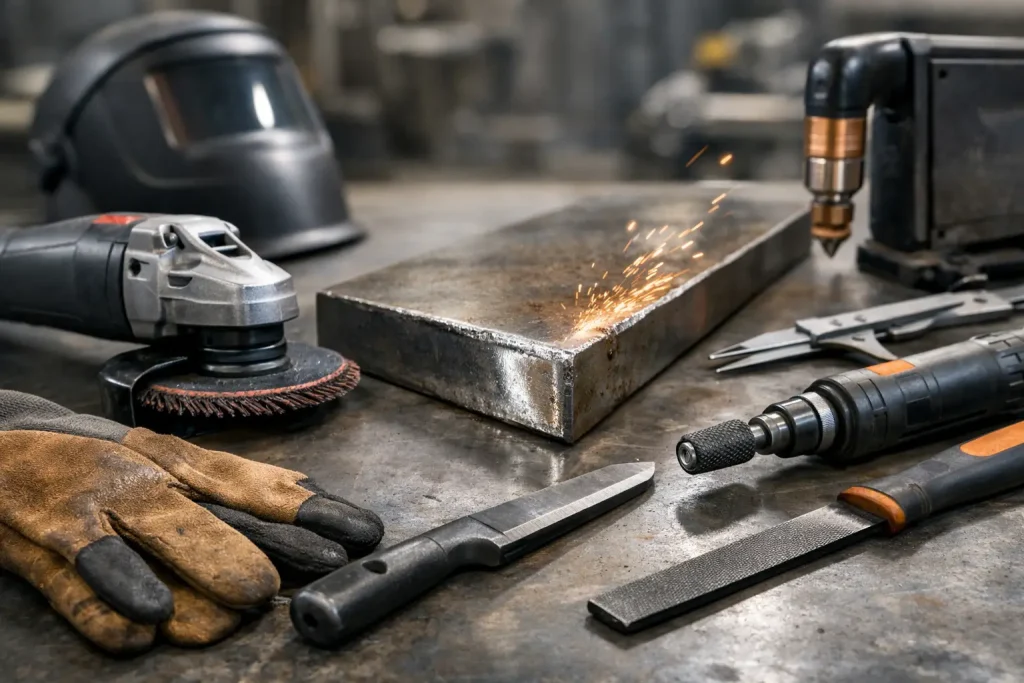
A weld can only be as reliable as the surface beneath it. Rust at the joint, oil in the groove, mill scale near the heat-affected zone, or leftover coating on a repair area can introduce porosity, lack of fusion, and costly rework. Selecting the best tools for weld preparation is therefore not simply a purchasing decision. It is a decision about weld quality, plant uptime, worker exposure, and the long-term condition of a high-value asset.
The right approach depends on the base material, contaminant, joint geometry, welding process, and project specification. A fabrication shop preparing repeatable new steel has different needs from an asset integrity team repairing corroded piping in the field. In many cases, the most effective solution combines tools rather than relying on one cleaning method for every task.
What Effective Weld Preparation Must Accomplish
Weld preparation has two separate jobs. First, the joint must be correctly shaped: edges aligned, bevels formed where required, and burrs removed. Second, the weld zone must be free of materials that can interfere with welding or compromise the finished weld.
That means removing visible rust, scale, paint, old coatings, oil, grease, moisture, and embedded debris. It also means avoiding unnecessary damage to the parent material. Aggressive methods can leave deep grinding marks, embed abrasive particles, round a prepared edge, or thin already-degraded steel. Those risks matter especially on pressure systems, thin material, heritage metalwork, and components with strict dimensional tolerances.
A practical preparation plan should define the required cleanliness level, the width of the area to be cleaned around the joint, and how the surface will be kept clean until welding begins. Cleaning a joint thoroughly only to leave it exposed to rain, fingerprints, or airborne dust can undo the work.
Best Tools for Weld Preparation by Task
Angle grinders and flap discs for joint profiling
An angle grinder fitted with an appropriate flap disc remains one of the most useful tools in weld preparation. It is effective for beveling edges, removing burrs, blending sharp transitions, dressing previous welds, and taking off localized heavy corrosion. For fabrication work, it gives the operator direct control over joint profile and fit-up.
Its limitation is that it is an abrasive process. A coarse disc can remove material quickly, but it can also gouge the substrate and alter the joint geometry. Abrasive residue and dust must be managed, particularly before welding stainless steel, aluminum, or other contamination-sensitive alloys. Use grinding when material removal or profile correction is required, not as an automatic answer to every surface-cleaning problem.
Wire brushes for light surface contamination
Hand wire brushes and powered wire wheels are useful for loose rust, light mill scale, and dry surface debris. They are accessible, low-cost tools for small areas and final touch-up work. A stainless steel brush should be dedicated to stainless steel applications to prevent cross-contamination from carbon steel particles.
Wire brushing is not a dependable solution for bonded coatings, heavy oxidation, or oily contamination. It can also burnish rust into pits rather than fully remove it. When a specification calls for a clean, consistent metal surface, a wire brush may be a supporting tool rather than the main preparation method.
Solvent cleaning for oil and grease
Solvent wiping is often necessary when oil, grease, cutting fluid, or marker residue is present. The method is straightforward, but execution matters. Use clean, lint-free wipes and change them frequently. Reusing a contaminated rag simply transfers oil from one part of the weld zone to another.
Solvents can be effective for organic contamination, but they do not remove corrosion, mill scale, or coatings. They also create handling, ventilation, fire-safety, and disposal considerations. In field environments, solvent-based preparation can be difficult to control, especially where drainage, confined-space restrictions, or environmental requirements apply.
Abrasive blasting for broad, heavily corroded areas
Abrasive blasting can clean large areas quickly and is commonly used where extensive corrosion, thick scale, or failed coatings must be removed. It may be a practical choice for large steel structures where access is open and the work area can be contained.
The trade-off is significant setup and cleanup. Blasting generates spent media, dust, and waste that may require containment, recovery, and regulated disposal. It can also affect nearby equipment and surfaces. For a small weld repair in an operating plant, erecting an enclosure and managing abrasive contamination may create more downtime than the repair itself.
Laser cleaning for selective, substrate-safe preparation
Laser cleaning is particularly effective when the goal is to remove rust, oxides, paint, oil, grease, or coatings from a defined weld zone without grinding away sound base metal. Controlled laser ablation targets the contaminant layer while preserving the underlying substrate and the surrounding geometry.
For weld preparation, this precision is valuable around pipe joints, flanges, structural repairs, delicate assemblies, and areas with restricted access. Operators can clean exactly where the welding procedure requires, including narrow bands along a joint line, without filling the area with blasting media or chemical wash residue. The process produces a highly visible cleaning effect, allowing teams to verify surface condition as work progresses.
Laser cleaning is not a replacement for every tool. It will not cut a new bevel, correct poor fit-up, or remove substantial excess weld metal as efficiently as a grinder. However, when contamination removal and substrate protection are the priority, it can reduce rework, minimize cleanup, and support faster return to service.
Inspection tools that confirm readiness
Preparation should be verified, not assumed. Good lighting, visual inspection aids, weld gauges, and surface-profile measurement tools help confirm that the joint is clean, correctly prepared, and free from obvious defects before welding begins. Where the procedure or client specification requires it, teams may also use cleanliness tests or documented inspection hold points.
Inspection is especially relevant after mechanical or abrasive cleaning. A surface can appear clean while retaining coating in pits, oil at the edge of the joint, or embedded abrasive particles. A deliberate inspection step prevents these issues from reaching the welding stage.
Match the Tool to the Contaminant and Weld Requirement
The best selection starts with a simple question: what must be removed, and what must remain untouched? Thick corrosion over a large, open structural area may support abrasive blasting. A damaged edge that needs reshaping requires grinding. Light debris may only need brushing. Oil requires controlled degreasing. A coated or corroded repair zone near sensitive equipment may be better suited to laser cleaning.
Material type also matters. Carbon steel generally tolerates a wider range of mechanical preparation methods than stainless steel or aluminum, which can be more vulnerable to cross-contamination and surface damage. For stainless steel repairs, tool segregation and clean handling practices are essential. For thin sections, avoid methods that remove excess material or create heat distortion.
The welding process should guide the final level of cleanliness. Processes such as GTAW are particularly sensitive to contamination, while all welding procedures benefit from a stable, clean weld zone. Always work to the approved welding procedure specification, client requirements, and applicable codes rather than relying solely on visual appearance.
Consider Setup Time, Waste, and Access
The purchase price of a tool does not represent its full project cost. For maintenance teams, the larger cost may be the time needed to isolate equipment, construct containment, mobilize labor, clean up waste, and release the area for hot work. These indirect requirements can outweigh the time spent on the actual cleaning task.
This is where selective methods can provide a measurable advantage. A laser cleaning service can be deployed for targeted preparation without abrasive media, blasting enclosures, or hazardous chemical waste. BKR Engineering applies controlled laser ablation to help asset owners prepare weld areas while protecting base materials and limiting disruption to surrounding operations.
Access should also shape the plan. Portable tools work well in tight spaces but can create dust and operator fatigue. Blasting needs room for containment and recovery. Laser cleaning is well suited to focused work in constrained or operational environments, provided the task is planned with appropriate laser safety controls, exclusion zones, and trained personnel.
Build a Repeatable Weld Preparation Process
Reliable results come from a repeatable sequence: inspect the area, remove the required contaminants, prepare the joint profile, verify cleanliness and dimensions, then protect the prepared surface until welding begins. The order can change based on the repair. For example, remove a coating first to expose the true condition of the metal before deciding how much grinding is necessary.
Avoid over-cleaning as well as under-cleaning. Removing more material than the welding procedure requires adds time and can affect component integrity. The goal is a clean, weld-ready surface with the correct geometry, not a visibly aggressive finish.
For critical repairs, treat weld preparation as part of quality assurance rather than a preliminary chore. The right tool is the one that removes the specific contaminant, preserves the material that must remain, and lets the welding team start with confidence.