
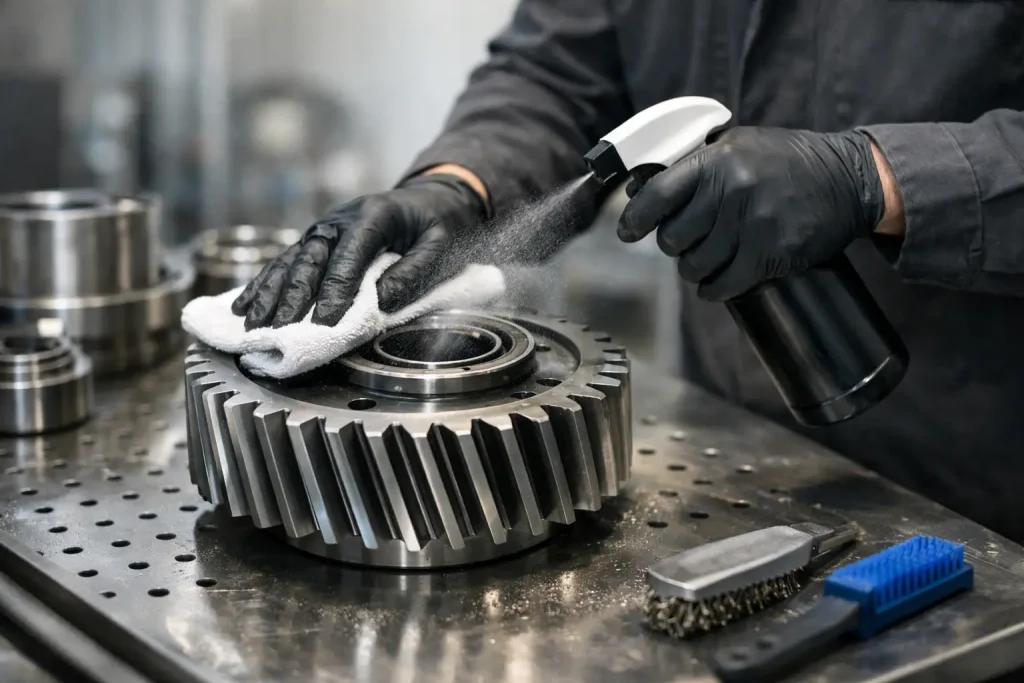
A heat exchanger cover is not ready for inspection simply because it looks clean. A thin film of oil, grease, process residue, or old preservative can conceal corrosion, interfere with coating adhesion, and compromise weld or repair preparation. For critical assets, metal degreasing without solvents is not just an environmental preference. It is a practical way to improve surface condition while avoiding the residue, handling requirements, and disposal burden associated with chemical cleaners.
The right method depends on the contaminant, base material, access conditions, and required finish. In many industrial maintenance and restoration projects, laser cleaning provides a highly controlled option for removing grease and other surface contamination without attacking sound metal beneath it.
Why solvent degreasing creates operational challenges
Solvents have long been used because they can dissolve oils quickly. However, speed at the point of application does not always mean efficiency across the entire job. Chemical degreasing often requires ventilation controls, personal protective equipment, containment, rinsing or wiping, and management of contaminated rags, absorbents, and liquid waste.
On an active plant, these requirements can expand a small cleaning task into a larger shutdown or work-permit exercise. Strong odors and flammability can also limit where and when cleaning can take place. Where equipment is located near sensitive processes, electrical components, drainage systems, or occupied areas, chemical use may create further restrictions.
There is also the question of what remains after cleaning. A solvent may dissolve grease, but dissolved contamination must still be removed from the surface. If wiping is incomplete or the wrong product is used, a film can remain and affect subsequent coating, bonding, inspection, or fabrication work.
How metal degreasing without solvents works
Solvent-free cleaning is a category rather than a single process. Depending on the application, facilities may use aqueous cleaning, steam, mechanical wiping, dry ice blasting, ultrasonic cleaning, or laser ablation. Each method has a place. The best choice is the one that removes the contamination to the required standard without adding unnecessary risk, waste, or damage.
Laser cleaning works by directing short, controlled pulses of laser energy onto the surface. Contaminants such as oil films, grease, oxides, paint, and carbonized residues absorb the energy differently from the underlying metal. The unwanted layer is broken down and lifted away while the operator controls the beam path, intensity, and cleaning area.
The visual result is one reason the process is valuable in field work. Operators can see the contamination being removed in real time, which helps them adjust the treatment around welds, edges, markings, machined faces, and other areas that need careful handling. This is particularly useful when only selected zones require cleaning rather than the entire component.
Laser cleaning does not create liquid chemical waste, and it does not rely on abrasive media striking the surface. Extracted contaminants still need to be managed responsibly through suitable fume extraction and work controls, but the waste stream is typically far more contained than that created by solvent washing or media blasting.
When laser cleaning is the right degreasing method
Laser cleaning is especially effective where precision matters as much as cleanliness. It can be used to remove localized oil and grease from steel structures, machine components, molds, fabricated assemblies, piping, tanks, and maintenance areas before inspection or repair.
For coating preparation, the process can remove contamination and loose surface oxides from targeted areas without flooding surrounding equipment with chemicals. For weld preparation, it can clean oil, paint, oxides, and residues from the joint area so that welding teams start with a more consistent surface condition. In restoration work, its selectivity makes it suitable for delicate metal features where aggressive abrasion could erase detail or alter the profile.
It is also a strong option for assets that cannot easily be moved into a blasting enclosure or wash bay. A mobile laser cleaning service can be deployed at the work area, reducing handling, transport, and setup time. This can be significant for large fabricated structures, installed plant equipment, heritage elements, and difficult-to-access components.
BKR Engineering applies controlled laser ablation to projects where surface preparation must be effective without unnecessary impact on the base material. The goal is not merely to make a surface look brighter. It is to create the required condition for the next stage of work, whether that is inspection, coating, repair, or continued service.
The limits to understand before choosing a solvent-free process
No cleaning method is universal. Heavy, wet grease deposits may require an initial mechanical removal step before laser treatment can efficiently address the remaining film and embedded residue. Thick, sticky contamination can shield the metal surface and slow the cleaning rate if it is not assessed properly at the start.
Laser cleaning also requires appropriate line-of-sight access. Deep internal passages, enclosed cavities, and complex parts with hidden surfaces may be better suited to aqueous or ultrasonic cleaning, provided the item can be removed and processed safely. For large uniform areas where a specific roughness profile is required for coating, abrasive blasting may remain the more economical choice.
The required surface standard matters as well. Degreasing for a visual inspection is different from preparation for high-performance coating, precision welding, or adhesive bonding. A competent provider should clarify what contaminants must be removed, how clean the surface needs to be, and whether a specified surface profile or cleanliness standard applies.
What to assess before starting the job
A reliable solvent-free degreasing plan starts with a site and material assessment. The base metal must be identified, along with the type and thickness of contamination. Oil from a machining process behaves differently from aged lubricant, bitumen, silicone residue, combustion deposits, or a mixed layer of grease and corrosion.
Access and surrounding conditions are equally relevant. Operators need to know whether there are nearby cables, seals, coatings to preserve, combustible materials, sensitive instruments, or occupied work areas. Extraction requirements, isolation needs, and permit conditions should be established before work begins, particularly in oil and gas, process, and construction environments.
A small test area is often the most useful first step. It confirms whether the selected process removes the contamination at the desired rate and whether the substrate responds as expected. It also gives project stakeholders a visible reference for the finished surface, helping align expectations before full-scale execution.
Operational benefits beyond waste reduction
The environmental case for reducing solvent use is clear, but maintenance teams also benefit from better control of the work itself. Localized laser cleaning can reduce masking, containment, and post-cleaning cleanup. With less secondary waste to handle, teams can focus more time on repair, inspection, or coating activities.
Substrate protection is another major advantage. Aggressive cleaning can remove more than contamination, especially around thin sections, detailed features, stamped information, and finished surfaces. Controlled laser ablation allows operators to target the unwanted layer with a level of selectivity that broad mechanical methods cannot always provide.
For asset owners, this can translate into fewer avoidable rework issues. A correctly prepared surface supports more reliable inspection findings, better coating adhesion, and cleaner repair areas. The value is highest when a small contamination problem could otherwise delay a critical task or create uncertainty about the condition of the metal beneath it.
The most effective cleaning decision is rarely about choosing the newest technology for its own sake. It is about selecting a method that gives the maintenance team a clean, verified surface with minimal disruption to the asset, the workforce, and the surrounding environment. When precision, reduced waste, and substrate preservation are priorities, solvent-free laser cleaning deserves to be part of that decision.