
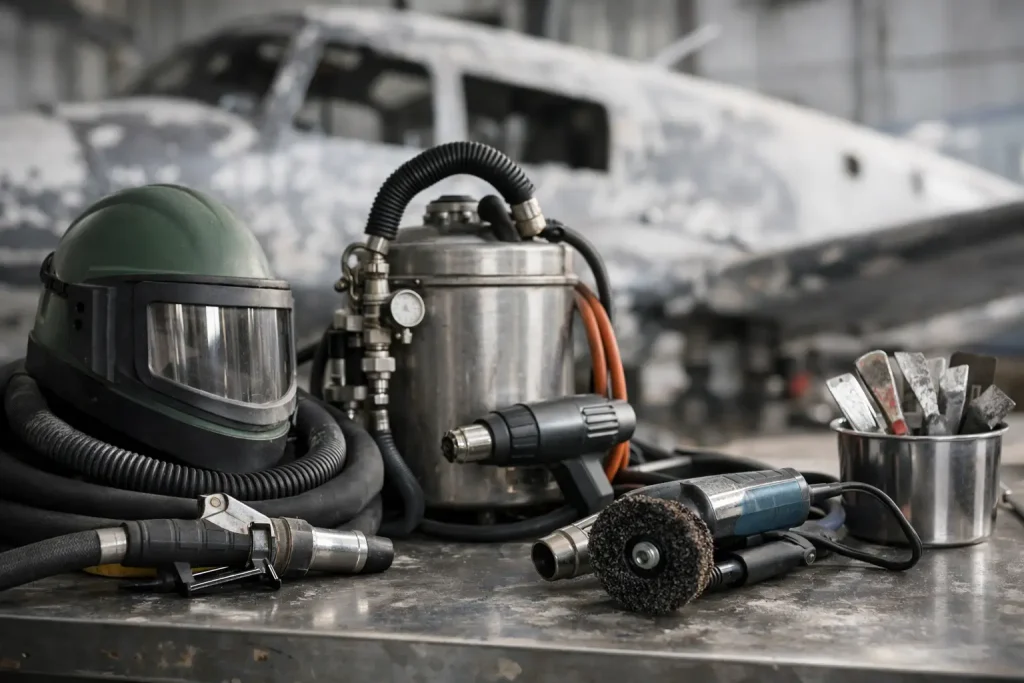
A coating can look like a simple layer until removal begins. On a process vessel, structural steel member, heritage facade, or precision-machined part, the wrong method can scar the substrate, spread contaminants, delay inspection, and turn a contained maintenance task into a larger shutdown. Paint stripping equipment should therefore be selected around the asset, the coating, and the required finish – not simply the fastest apparent removal rate.
For asset owners and maintenance teams, the decision affects more than appearance. It influences worker exposure, waste handling, access requirements, production schedules, and the condition of the surface that remains after the paint is gone.
What Paint Stripping Equipment Must Accomplish
Effective paint removal is controlled removal. The goal may be complete coating removal before recoating, selective removal around corrosion, exposure of welds for inspection, or preservation of an original substrate during restoration. Each objective calls for a different level of energy, containment, and precision.
Traditional methods can be effective in the right setting. Abrasive blasting removes heavy coatings quickly across large, accessible steel areas. Mechanical tools can handle small repairs. Chemical strippers may be considered for complex profiles or locations where impact must be minimized. But each method brings practical constraints: blast media and dust, chemical residues, water use, noise, access restrictions, or a risk of removing base material along with the coating.
The best paint stripping equipment removes only what needs to be removed while giving the project team a predictable path to the next activity. That may mean coating application, non-destructive testing, corrosion assessment, welding, or cosmetic restoration.
How to Choose Paint Stripping Equipment
A sound selection process starts with field conditions, not a product catalog. Paint type, coating thickness, substrate sensitivity, geometry, location, and project schedule all matter. A solution that performs well on flat carbon steel in a workshop may be unsuitable for a coated valve assembly in an operating facility.
Start with the substrate and coating system
Carbon steel can tolerate methods that would be unacceptable on aluminum, stainless steel, copper alloys, stone, timber, or historic surfaces. Equally, a thin decorative coating behaves differently from a multilayer marine system, epoxy lining, intumescent coating, or aged lead-containing paint.
Before work begins, identify the coating where possible. Unknown coatings should be treated cautiously, particularly in older assets. Testing for hazardous constituents and establishing suitable controls protects workers and prevents waste streams from being mishandled. It also helps determine whether removal should be full-depth or limited to failed areas.
Consider access, containment, and operating conditions
Surface preparation is rarely performed in an empty, unrestricted space. Plants may have nearby equipment, active operations, confined areas, elevated work, sensitive electronics, or public-facing spaces. These conditions can make enclosure construction, abrasive recovery, or chemical wash-down impractical.
Ask practical questions early: Can the area be isolated? Is there room for a blast enclosure? What cleanup is required before the asset returns to service? Will generated debris affect adjacent equipment? Is the work near drains, waterways, occupied spaces, or ignition-sensitive areas? The answers often change the preferred method.
Define the required surface condition
Removing paint is not always the final requirement. A coating contractor may need a specified profile for adhesion. An inspection team may need a clean, undamaged surface around a weld. A restoration project may require paint removal without altering delicate details beneath it.
This distinction matters because some equipment removes coatings and simultaneously roughens the surface, while other methods leave the substrate largely unchanged. Neither outcome is universally better. The correct outcome depends on the next stage of the work.
Account for the true cost of cleanup
The hourly rate of a stripping method is only one part of project cost. Abrasive media, containment, ventilation, waste collection, disposal, cleanup labor, permits, and downtime can outweigh the cost of the removal activity itself. Chemical methods can introduce additional neutralization and disposal requirements.
For high-value or difficult-to-access assets, a slower but more selective process may deliver a better overall result. The relevant measure is total project impact: labor, risk, waste, access, quality, and time out of service.
Where Laser Cleaning Changes the Equation
Laser cleaning is a form of controlled laser ablation. The laser energy is directed at the coating or contaminant, which absorbs energy and is removed while the underlying substrate can remain protected when the correct settings and technique are used. The process is highly visual, allowing operators and project stakeholders to see the coating lift away and the cleaned surface emerge in real time.
For paint stripping equipment, that level of control is valuable where the base material must be preserved. Examples include corrosion removal around welds, coating removal from machinery, surface preparation on fabricated components, cleaning of delicate metal details, and restoration work where aggressive media could erode the original surface.
Laser cleaning does not rely on abrasive media or chemical stripping agents. This can reduce secondary waste, simplify cleanup, and avoid the extensive enclosure requirements associated with some blasting activities. In many maintenance environments, it also supports more localized work, reducing the disruption caused by broad-area preparation methods.
There are trade-offs. Laser cleaning is not automatically the best choice for every square foot of thick coating on open structural steel. Large, uniform surfaces with generous access may still favor conventional blasting when surface profiling is required. Laser cleaning is strongest when selectivity, reduced waste, controlled access, and substrate protection have high value.
Plan the Work Before Mobilization
Good results depend on more than the equipment itself. A short site assessment should confirm the coating condition, substrate, access route, work elevation, power availability, nearby assets, and acceptance criteria. Test cleaning on a representative area is often the most reliable way to establish removal speed and surface outcome before full deployment.
The project plan should also define how removed material will be managed. While laser cleaning greatly reduces the volume of secondary waste compared with media blasting, the removed coating still requires appropriate collection and disposal, especially when hazardous materials may be present. Local extraction and controlled work practices remain essential.
For operating facilities, coordination is equally important. Maintenance leaders should align the cleaning scope with inspection windows, coating crews, isolation requirements, and handback deadlines. The objective is not merely to remove paint, but to provide the next team with a clean, usable surface without creating avoidable delays.
When a Service Partner Is the Better Choice
Specialized paint removal often requires more than renting equipment. Operators need the experience to adjust settings, maintain consistent surface quality, work safely around live assets, and recognize when a coating or substrate needs a different approach. This is particularly relevant for heritage structures, oil and gas assets, complex fabrications, and equipment with tight tolerances.
A service-led approach gives project teams access to the right method without committing to equipment ownership, operator training, maintenance, and compliance management. BKR Engineering applies laser cleaning as a controlled field service, helping clients assess the job, protect critical substrates, and keep surface preparation aligned with operational requirements.
The practical choice is rarely about finding the most aggressive paint removal method. It is about selecting equipment and expertise that leave the asset ready for what comes next. When the substrate, schedule, and surrounding environment matter, precise removal is often the most efficient way forward.