
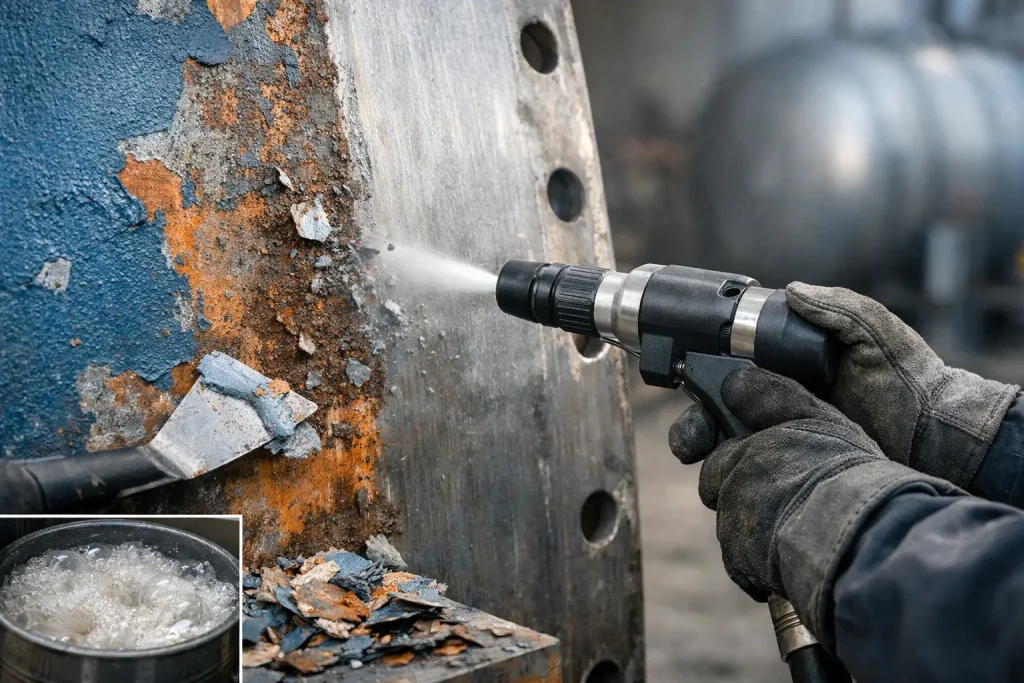
A coating removal job can either prepare an asset for years of reliable service or create expensive rework through gouged steel, contaminated surfaces, or unnecessary shutdown time. Knowing how to strip industrial coatings starts with one principle: remove only what must be removed, while protecting the substrate and the work environment.
For plant equipment, structural steel, tanks, pipelines, fabricated components, heritage surfaces, and inspection-critical areas, the best method is rarely the fastest-looking option. The right approach depends on coating type, substrate condition, access constraints, contamination risks, and the condition required after stripping.
Start With the Coating, Substrate, and End Requirement
Industrial coatings are designed to resist removal. Epoxies, polyurethane topcoats, zinc-rich primers, intumescent coatings, powder coatings, and multilayer paint systems all react differently to heat, impact, abrasion, and chemicals. A method that removes a weathered topcoat efficiently may be unsuitable for a thick epoxy system or a delicate metal surface.
Before selecting equipment or mobilizing a crew, define the job clearly. Identify the coating system where possible, measure its approximate thickness, and check for corrosion below the film. The base material matters just as much. Carbon steel, stainless steel, aluminum, copper alloys, concrete, stone, and historic surfaces each have different tolerances for heat, abrasion, and chemical exposure.
The required finish should guide the decision. Are you exposing a weld for inspection, preparing steel for recoating, removing corrosion around bolted connections, restoring architectural metalwork, or stripping an entire vessel? A localized repair does not always need full-surface removal. Selective stripping can reduce labor, waste, and downtime while preserving sound coating that remains fit for service.
How to Strip Industrial Coatings: Choose the Right Method
There is no universal coating removal method. Each option has advantages, limitations, and operating requirements.
Abrasive Blasting
Abrasive blasting is widely used for large steel surfaces and can produce a suitable profile for many coating systems. It is effective when complete coating removal and surface preparation are needed across broad, accessible areas.
However, blasting generates considerable dust and spent media. It may require containment, ventilation, cleanup, and careful waste management, especially when older coatings contain hazardous materials. Aggressive media can also alter a substrate, damage edges, or create issues around sensitive machinery and occupied facilities.
Chemical Stripping
Chemical stripping can soften or dissolve certain coatings, including thick or complex paint layers. It can be useful for shapes that are difficult to reach with mechanical tools and for substrates where abrasive action is unacceptable.
The trade-off is chemical handling. Strippers require controlled application, dwell time, removal of residues, and proper disposal. In industrial settings, chemical runoff and residual contamination can complicate recoating, inspection, and environmental compliance. Some products also introduce worker-exposure concerns and may not be practical in enclosed or operating areas.
Mechanical Removal
Needle scalers, grinders, scrapers, and rotary tools are practical for small areas, edges, weld zones, and localized maintenance. They are familiar, portable, and often readily available on site.
Their limitation is consistency. Mechanical tools can leave uneven surfaces, produce noise and dust, and remove base material if used aggressively. They are labor-intensive on large areas and may be unsuitable where precise cleaning boundaries or low contamination are required.
Laser Cleaning and Laser Ablation
Laser cleaning uses controlled laser energy to ablate coatings, rust, oxides, oil, and other contaminants from a surface. When set correctly, the process targets the unwanted layer while leaving the underlying substrate intact. The visible effect is immediate: the coating is removed in a controlled path, exposing a clean surface without blasting media or chemical stripping residue.
For high-value equipment and sensitive applications, this level of selectivity is a significant advantage. Laser ablation can be used for localized coating removal, weld cleaning, corrosion treatment, inspection preparation, and restoration work where substrate preservation is critical. It also reduces the need for blasting enclosures and avoids the large volumes of spent abrasive or chemical waste associated with other methods.
Laser cleaning is not automatically the best fit for every large-scale stripping project. Surface area, coating thickness, access, geometry, and production schedule still matter. A site assessment helps determine whether laser cleaning should be the primary method or part of a combined surface-preparation plan.
Plan the Work Before Removing the First Square Foot
Successful stripping begins well before the coating comes off. Isolate the work area, confirm access, and identify equipment that must remain protected from dust, heat, vibration, or debris. For operational plants, coordinate the work window with production, maintenance, inspection, and safety teams.
A test patch is often the most valuable first step. It confirms removal speed, shows how the substrate responds, and reveals whether contamination or corrosion is present beneath the coating. It also establishes an acceptable finish standard before full production begins. This avoids a common failure: stripping a large area quickly, then discovering the surface profile or cleanliness is unsuitable for the next activity.
For recoating work, align the stripping method with the coating manufacturer’s preparation requirements. A surface may look clean but still fail adhesion testing if it retains salts, oils, chemical residues, or poorly bonded material. Where needed, verify cleanliness through visual inspection and appropriate surface tests rather than relying on appearance alone.
Control Safety, Containment, and Waste
Coating removal is a safety and environmental task as much as a surface-preparation task. Older industrial coatings can contain lead, chromium compounds, or other hazardous constituents. Even modern systems may produce airborne particulates or waste that requires controlled handling.
The work plan should address hazard identification, ventilation, personal protective equipment, fire controls, access restrictions, and waste segregation. If blasting or grinding is used, containment may be necessary to prevent dust migration. If chemical stripping is used, capture and disposal procedures must account for both the removed coating and the chemical product.
Laser cleaning changes the waste profile rather than eliminating the need for controls. Removed material is still captured and managed appropriately, but there is no spent abrasive media and no chemical stripping sludge. For facilities where cleanup, disposal, and restricted access drive project costs, that distinction can materially improve the overall job outcome.
Protect the Surface After Stripping
Once bare metal is exposed, corrosion can begin quickly in humid, coastal, or process-intensive environments. Do not treat stripping as an isolated task. Plan inspection, repair, coating application, or preservation steps before the surface is opened.
For carbon steel, the time between cleaning and recoating should be tightly controlled. For stainless steel and nonferrous metals, prevent cross-contamination from unsuitable tools or abrasives. On heritage or architectural surfaces, document the cleaned area and agree on the desired visual finish before expanding the work scope.
A controlled removal process also supports better decisions. Exposed surfaces can reveal under-film corrosion, failed weld repairs, pitting, cracking, or areas where the coating system failed prematurely. That information is valuable to asset integrity teams, provided the substrate has not been damaged during preparation.
Select a Partner That Understands the Asset
The most effective stripping contractor does more than bring equipment. They assess the coating system, understand the operating environment, establish a safe work method, and adjust the process to protect the asset. This is especially relevant in oil and gas facilities, infrastructure projects, fabrication yards, and restoration work where the consequences of surface damage can extend well beyond the immediate job.
BKR Engineering applies controlled laser cleaning to help asset owners remove targeted coatings and contaminants with precision, while reducing downtime and waste-management demands. The practical value is not simply a cleaner surface. It is a surface prepared for the next decision, whether that is inspection, repair, recoating, or return to service.
When the coating must come off but the asset cannot be compromised, begin with a small, well-defined test area. The result will show far more than a specification sheet: it will reveal the safest, most efficient path for the work ahead.