
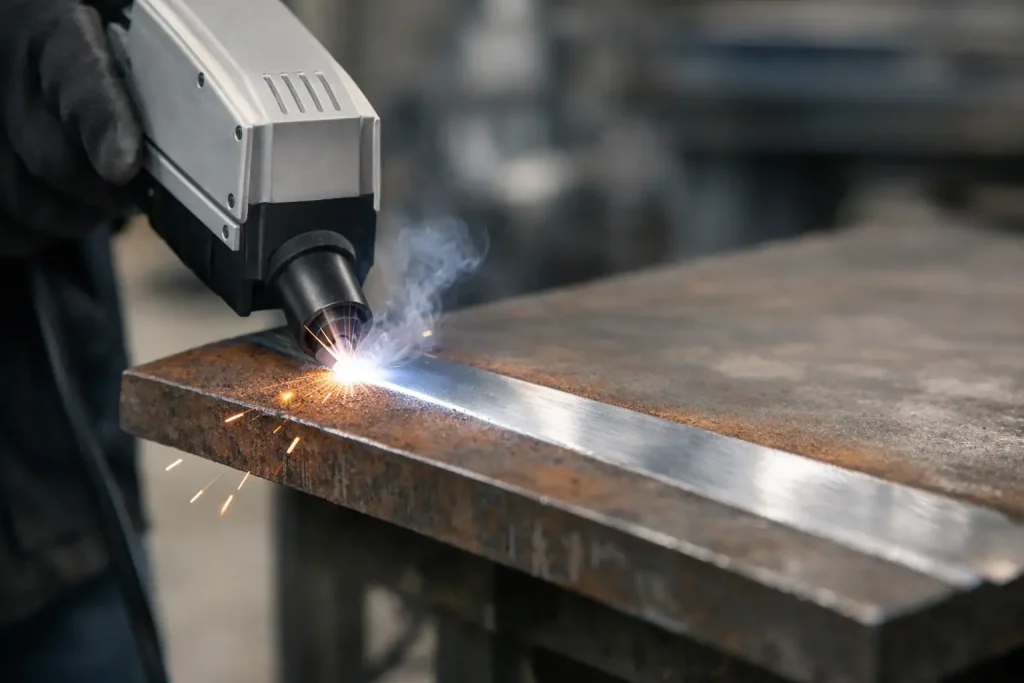
A weld can fail before the arc ever starts. Mill scale, oxidation, oil, coating residue, and embedded contamination all interfere with fusion, consistency, and inspection results. That is why laser cleaning for weld prep is gaining attention across fabrication, maintenance, and asset integrity work where surface condition directly affects weld quality.
For plant managers and contractors, the issue is not simply whether a surface looks clean. The real question is whether the prep method removes the right contaminants, protects the base material, and fits the production environment without adding unnecessary downtime. In many cases, traditional methods do the job, but they also introduce trade-offs that become expensive fast.
Why surface prep matters before welding
Weld prep is not cosmetic. Surface contaminants can change arc stability, trap impurities in the weld zone, and increase the chance of porosity, lack of fusion, or inclusions. Even when defects do not appear immediately, poor prep can reduce repeatability and create avoidable variation between operators, shifts, or job sites.
This matters even more in oil and gas, structural fabrication, pressure systems, and repair work, where weld quality is tied to safety, compliance, and asset life. If a crew spends hours grinding or wiping a joint but still leaves behind oxidation or residue, the cost does not stop at prep time. It can show up later as rework, delayed inspection, or shortened service life.
Laser cleaning addresses that problem differently. Instead of abrading the whole surface or relying on chemical action, it uses controlled laser ablation to remove contamination selectively. The goal is a clean, weld-ready surface without unnecessary removal of sound base metal.
How laser cleaning for weld prep works
Laser cleaning directs high-intensity light onto the surface layer that needs to be removed. Rust, oxides, oils, paint traces, and other contaminants absorb the energy differently than the underlying substrate. With the right settings, those unwanted layers are lifted away while the base material remains intact.
That selective action is one of the main reasons laser cleaning stands out in weld preparation. Grinding can smear contamination across the surface if handled poorly. Abrasive blasting can be effective, but it creates media waste, dust, and cleanup requirements that are not always practical in live industrial environments. Chemical cleaning may remove certain residues well, but it adds handling controls, disposal issues, and process variability.
Laser cleaning gives operators tighter control. On weld seams, bevels, heat-affected zones, and adjoining surfaces, that control helps prepare exactly the area that matters without over-processing the rest of the component.
Where laser cleaning delivers the most value
The strongest case for laser cleaning for weld prep is usually not that it replaces every other method. It is that it solves specific prep problems more cleanly, safely, and predictably.
On corroded steel, laser cleaning can remove rust and oxidation without the aggressive material loss associated with some mechanical methods. On fabricated parts with oil or residue from handling and storage, it can create a more consistent surface before welding. On repair work, it is especially useful where the surrounding material needs to be preserved and where access, containment, or downtime make blasting difficult.
This is also why the method fits high-value assets and sensitive work scopes. If the job involves preserving dimensions, minimizing collateral damage, or preparing localized weld areas in operating facilities, precision matters. A broad-force cleaning method may be fast in open shop conditions, but less suitable in confined spaces or near finished surfaces and adjacent equipment.
Weld quality, consistency, and rework
Most decision-makers do not adopt a new cleaning method because it sounds advanced. They adopt it when it reduces avoidable cost. In weld prep, that usually means fewer defects, more consistent weld performance, and less rework.
A cleaner joint face and surrounding area can improve arc behavior and reduce the chance of contamination entering the weld pool. That does not mean laser cleaning alone guarantees a perfect weld. Procedure, fit-up, filler selection, and operator technique still matter. But when prep is controlled well, one common source of variability is taken off the table.
Consistency is often the bigger advantage than speed alone. A process that prepares each joint to the same standard supports welding procedure compliance and inspection outcomes. For fabrication managers and maintenance teams, that predictability is often worth more than a modest gain in prep time.
The operational case against blasting and chemicals
Traditional prep methods remain common for good reason. They are familiar, widely available, and in some cases highly effective. But they can also create extra work around the work.
Abrasive blasting often requires containment, media handling, dust control, cleanup, and disposal. In active facilities, those requirements can complicate scheduling and safety planning. Chemical cleaning introduces storage, ventilation, operator protection, and waste management issues. Mechanical grinding is simple on paper, yet labor-intensive in practice, and it can be inconsistent from one technician to another.
Laser cleaning changes that equation. Because it does not rely on blasting media or chemical agents, there is less secondary waste to manage. The work area can often remain more controlled and more orderly. For facilities focused on reducing shutdown duration and environmental burden, that is a practical benefit, not a marketing claim.
It depends on the substrate and the job
No serious surface preparation method is universal, and laser cleaning is no exception. The right outcome depends on the substrate, contaminant type, geometry, accessibility, and production target.
For heavy coating removal across very large open surfaces, another method may still be more economical. For highly localized weld prep on valuable components, laser cleaning is often a strong fit. Stainless steel, carbon steel, aluminum, and mixed-condition surfaces each respond differently, and the process settings need to match the task.
That is where field experience matters. The difference between acceptable cleaning and effective weld prep is not just the machine. It is the ability to set the process correctly, assess what is on the surface, and work within site constraints. A partnership-driven service model matters because many clients are not looking to buy equipment and build an internal laser process from scratch. They need dependable execution.
Safety, downtime, and site practicality
In industrial environments, prep methods are judged by more than technical performance. Site practicality matters. Can the work be done without building extensive enclosures? Will it create dust that affects adjacent operations? Does it add hazardous waste streams? How much downtime does setup require?
Laser cleaning offers clear advantages here, especially for maintenance and repair scopes. The process can reduce disruption compared with blasting and avoid the disposal burden tied to chemical methods. It also supports more selective cleaning, which is valuable when only the weld zone needs preparation rather than the entire asset surface.
For facility owners and maintenance leaders, these points translate directly into planning flexibility. Less setup can mean shorter shutdown windows. Less waste can mean simpler compliance. Better control can mean less risk to the substrate and less chance of turning a prep task into a repair task.
What to expect from a service partner
If you are evaluating laser cleaning for weld prep, the conversation should go beyond equipment power and cleaning speed. The better question is whether the provider understands welding requirements, substrate sensitivity, and site realities.
A capable service partner should be able to assess contaminants, recommend whether laser cleaning is the right fit, define the cleaning scope clearly, and execute without disrupting adjacent operations more than necessary. In sectors like construction, fabrication, and oil and gas, experience in live industrial settings is not optional. It affects safety planning, access strategy, and the quality of the result.
This is where a specialist such as BKR Engineering brings value. The technology matters, but so does the judgment behind it. Precision cleaning is most effective when it is applied as part of a practical surface preparation plan, not treated as a one-size-fits-all solution.
Why the method is gaining ground
The shift toward laser cleaning is happening because more operators are asking surface preparation to do more at once. They want clean weld-ready surfaces, less substrate damage, less cleanup, safer work conditions, and lower environmental burden. Traditional methods can meet some of those needs, but often not all at the same time.
Laser cleaning meets a growing need for precision in environments where downtime, waste, and rework are expensive. For weld prep, that makes it more than an alternative cleaning method. It becomes a way to improve process control before welding even begins.
If your weld quality depends on what happens before the first pass, surface preparation deserves the same attention as the weld itself. The right prep method should not just remove contamination. It should make the whole job easier to execute with confidence.