
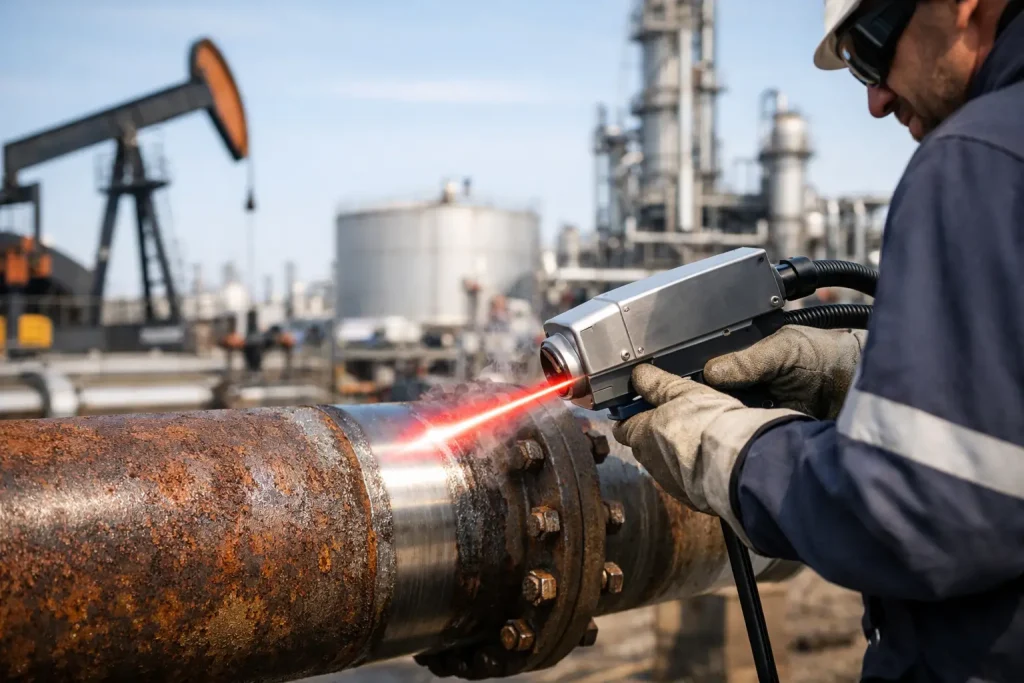
A corroded flange, a coated weld zone, or hydrocarbon residue on a critical surface can turn a routine maintenance task into a shutdown risk. That is where laser cleaning for oil and gas stands out. It gives operators and contractors a way to remove contamination with control, protect the base material, and keep preparation work aligned with safety, inspection, and production requirements.
In oil and gas environments, surface condition is never a cosmetic issue. It affects coating performance, weld quality, inspection accuracy, and asset life. Traditional methods such as grit blasting, power tooling, and chemical cleaning still have their place, but they also bring trade-offs – containment requirements, secondary waste, media handling, difficult cleanup, and a higher chance of damaging the substrate in sensitive areas.
Why laser cleaning for oil and gas is gaining traction
Laser cleaning uses focused light energy to ablate rust, oxides, paint, grease, and other surface contaminants from a substrate. The process is highly selective. Instead of impacting the whole surface mechanically, it targets the unwanted layer with a level of precision that is difficult to achieve with abrasive methods.
That precision matters in oil and gas because many cleaning jobs happen on high-value assets where the surface profile, geometry, and material condition must be preserved. Stainless steel components, machined parts, valves, piping assemblies, weld seams, and fabricated structures often need cleaning that is aggressive on contamination but careful on the base material.
The operational appeal is just as important. Laser cleaning can reduce setup complexity, avoid blast media contamination, and minimize waste streams associated with chemicals or abrasive debris. For facilities working under strict safety, environmental, and uptime pressures, those advantages are practical, not theoretical.
Where it fits best in oil and gas operations
Laser cleaning is especially effective where selectivity and control are more valuable than raw area coverage. Large open-surface coating removal may still favor other methods depending on production rates, access, and specification. But many oil and gas tasks are not simple square-footage jobs. They involve congested spaces, critical tolerances, and surfaces that need to be cleaned without collateral damage.
Corrosion and oxide removal
Rust and oxide layers on carbon steel components can interfere with inspection, recoating, and maintenance work. Laser cleaning removes these layers while preserving the substrate beneath. That makes it a strong option for localized corrosion treatment, flange faces, support structures, and targeted preparation ahead of repairs.
Weld preparation and post-weld cleaning
Surface cleanliness has a direct effect on weld integrity. Laser cleaning can remove mill scale, oxides, paint, and residues before welding, helping improve consistency in weld preparation. After welding, it can also be used to clean discoloration and oxidation in applications where surface condition matters for inspection or finishing.
Coating and paint removal
Not every coating removal job needs full abrasive blasting. In maintenance windows where only specific sections must be stripped for repair, inspection, or recoating, laser cleaning offers a more controlled approach. It is well suited to localized coating removal on pipes, tanks, structural steel, and fabricated components.
Oil, grease, and surface contamination removal
Hydrocarbon residue, grease, and process-related contamination can affect adhesion, inspection, and production quality. Laser cleaning can remove these contaminants without introducing additional chemical agents, which is valuable where residue control and waste management are part of the decision.
The operational benefits decision-makers care about
For plant managers and maintenance teams, cleaning technology is rarely judged on cleaning alone. The real question is what it does to schedule, safety, and total job cost.
Laser cleaning helps reduce downtime by shortening preparation and cleanup in the right applications. Because there is no abrasive media to deliver, recover, and dispose of, site logistics can be simpler. That can make a difference during shutdowns, turnarounds, and live-facility maintenance where every hour of access matters.
It also supports substrate protection. Overblasting, embedded media, and unintended surface erosion can create rework or compromise asset condition. Laser cleaning lowers that risk when used correctly, especially on precision surfaces or components that cannot tolerate aggressive mechanical treatment.
Environmental performance is another strong advantage. Eliminating blast media and reducing chemical use means less secondary waste to manage. For operators with strict site controls or sustainability targets, that can improve both compliance and cost planning.
Safety deserves equal attention. Every cleaning method has hazards and requires controls, and laser systems are no exception. But compared with some conventional methods, laser cleaning can reduce airborne particulates, handling of hazardous chemicals, and the broader housekeeping burden associated with blasting residue. The result is often a cleaner and more controlled work area.
What laser cleaning does better – and where it depends
The strongest case for laser cleaning in oil and gas is not that it replaces every conventional method. It is that it solves specific problems better.
It performs particularly well on targeted cleaning, selective coating removal, corrosion treatment, weld zone preparation, and jobs where preserving the underlying material is critical. It also adds value in locations where containment for blasting is difficult or where contamination from media cannot be tolerated.
At the same time, it is not a one-size-fits-all answer. Very large-area production stripping may favor other methods if throughput is the only metric. Surface condition, contamination type, coating thickness, access constraints, and required finish all influence the best choice. In practice, the most effective maintenance strategies are often method-based, not ideology-based. The right contractor should be able to assess when laser cleaning is the best option and when another process makes more sense.
How project teams should evaluate laser cleaning for oil and gas
A useful evaluation starts with the surface, not the technology. What needs to be removed, and what must remain untouched? A rusted structural member, a painted valve body, and an oil-contaminated stainless assembly each require a different cleaning strategy.
The next consideration is the outcome specification. Is the goal inspection readiness, weld preparation, coating adhesion, cosmetic restoration, or contamination control? Laser cleaning can meet a wide range of objectives, but the process settings and work method need to align with the required result.
Access and shutdown conditions also matter. If the work is in a live plant area, on a congested skid, or during a short maintenance window, reduced setup and cleanup can become a major advantage. If the area is wide open and the job is purely bulk coating removal, the cost-benefit equation may shift.
Finally, experience matters. Laser cleaning is precise, but precision only creates value when it is applied by a team that understands industrial surfaces, safety requirements, and field conditions. In oil and gas work, technical capability and execution discipline go together.
Why service delivery matters as much as the equipment
Industrial buyers are not just selecting a machine. They are selecting a cleaning outcome, a work method, and a partner who can perform safely on an active site.
That is why field experience is so important. Oil and gas projects rarely happen in ideal conditions. Access can be limited, permits can be strict, and surfaces are often more variable than they look in a scope document. A capable laser cleaning provider should be able to assess the substrate, define realistic productivity, and execute without creating delays for adjacent trades.
For many clients, the visual result is part of the confidence factor. Laser cleaning offers a clear, visible transformation that helps maintenance teams verify what has been removed and what has been preserved. That visibility supports decision-making during inspection, repair, and handover.
As Singapore’s first laser cleaning service company, BKR Engineering has seen that clients value more than the technology itself. They value dependable execution, honest assessment, and cleaning methods that support plant performance without creating unnecessary waste or damage.
A practical fit for modern asset care
Oil and gas operators are under constant pressure to extend asset life, control risk, and manage maintenance budgets carefully. Laser cleaning fits that reality because it brings precision to jobs where surface condition directly affects reliability and cost.
It is not about replacing every legacy method. It is about choosing a cleaner, more controlled approach where that control creates measurable value. When the job calls for selective removal, substrate protection, reduced cleanup, and better preparation for the next step, laser cleaning is often the more practical decision.
The best maintenance outcomes usually come from asking a simple question early: what cleaning method gives us the result we need without adding problems we do not need?