
MARINE & MARITIME
Laser cleaning for
shipyards & marine assets.
Targeted surface restoration for ships, offshore equipment and marine components — assessed for your material, access and maintenance requirements.
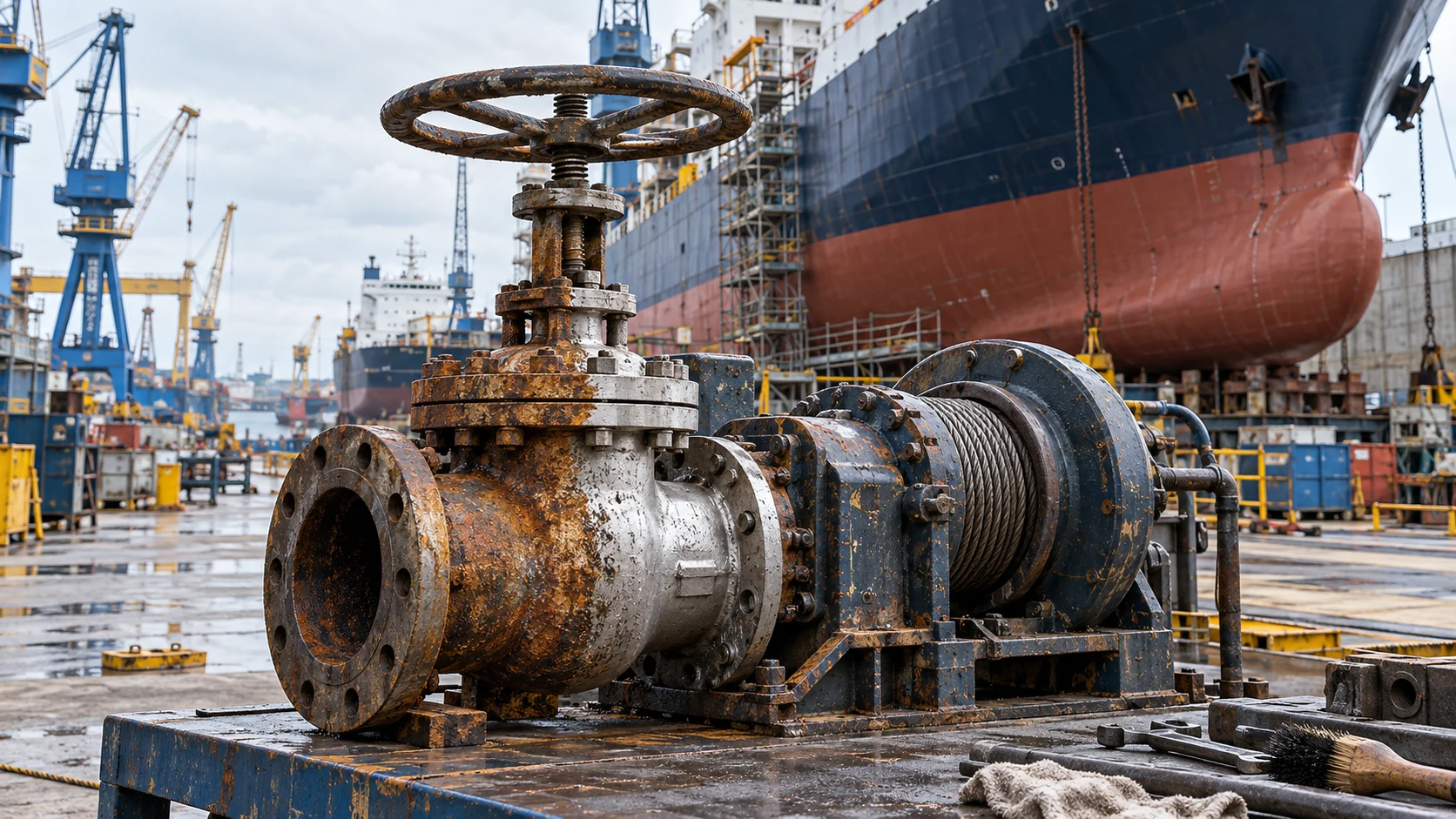
SHIPYARDS · SHIP REPAIR · OFFSHORE EQUIPMENT
Restore the surface.
Prepare for the next job.
Laser cleaning can provide a targeted method for removing rust, oxides and selected coatings from accessible marine metal surfaces. For shipyards and repair contractors, the value lies in treating the areas that need attention and establishing a suitable surface for the next activity.
BKR assesses the asset, contamination and required finish before proposing a cleaning scope. A representative trial establishes the response of the actual surface.
CORROSION REMOVAL
Rust & oxide treatment
Assess cleaning of accessible corroded steel surfaces on vessel components, shipyard fabrications and offshore equipment.
SELECTIVE STRIPPING
Localised coating removal
Define the coating boundary and substrate condition when only selected zones need preparation.
INSPECTION & REPAIR
Expose the working surface
Prepare accessible areas for inspection, welding or repair, with acceptance criteria agreed for the next activity.
MARINE COMPONENTS
Flanges, valves & assemblies
Consider accessible flange faces, bolts, pipework and machinery surfaces where detail and treatment boundaries matter.
OFFSHORE EQUIPMENT
Surface restoration
Assess accessible steel structures, housings and maintenance components, accounting for their material and existing surface treatments.
TANKS & INTERNAL AREAS
Connect to tank-cleaning capability
Discuss tank and internal-surface requirements through BKR’s dedicated assessment and confined-space engineering approach.
WHY CONSIDER LASER CLEANING?
Targeted work.
A different maintenance option.
The strongest fit is established by the material, unwanted surface layer, access and required outcome.
SELECTIVITY
Treat the defined area
Concentrate treatment on the agreed zone around a repair, inspection area or detailed component.
MEDIA HANDLING
No added blast abrasive
The laser process does not introduce blast media. Removed coatings, dust and fumes still require appropriate extraction and waste handling.
MATERIAL CONTROL
Establish the process window
Trial the surface to select a cleaning approach that removes the unwanted layer while assessing the condition of the underlying material.
METHOD SELECTION
Match the method to the scope.
Surface area, coating composition, corrosion condition, required surface profile and access all influence suitability. Wide-area stripping may call for a different method; targeted restoration and detailed components can present a stronger application. Cleaning rates and the proposed finish are established for the specific job.
01 / DEFINE
Share the requirement
Send photographs, material details, dimensions, coating or contamination information and the required finish.
02 / ESTABLISH
Trial a representative area
Assess the cleaning response and define acceptance criteria for inspection, repair or recoating.
03 / COORDINATE
Plan the working arrangement
Align access, equipment placement, extraction and work controls with the shipyard or facility’s maintenance window.
PREPARATION FOR NDT
Prepare selected inspection areas.
Explore precise spot cleaning, movement between test locations and controlled removal of obscuring surface layers, with the required finish agreed for the inspection method.
START WITH AN ASSESSMENT
Discuss your shipyard or offshore-equipment scope.
Send surface photographs, dimensions and the finish you need. We will discuss a practical next step.