
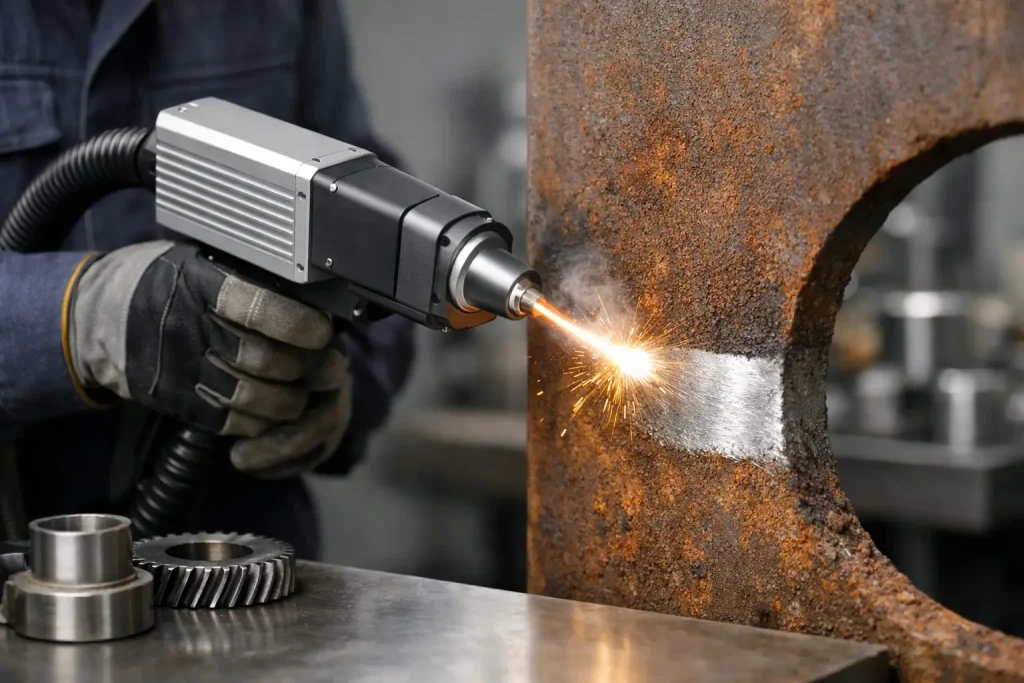
A corroded flange, overspray on a mold, carbon buildup on production equipment, coating failure on structural steel – these are not just cleaning problems. They affect inspection quality, shutdown duration, rework, and asset life. Industrial laser cleaning services are gaining attention because they solve those issues with a level of control that abrasive blasting and chemical cleaning often cannot match.
For asset owners and maintenance teams, the value is straightforward. Laser cleaning removes contamination, rust, oxides, paint, oil, grease, and other unwanted layers through controlled ablation, while protecting the base material underneath. That matters when the substrate itself is expensive, critical, or difficult to replace.
What industrial laser cleaning services actually do
Laser cleaning uses a concentrated beam of light to target surface contaminants. The unwanted layer absorbs the laser energy and is removed, while the underlying substrate remains intact when the process is properly set and controlled. That selectivity is the reason the method is being adopted across industrial maintenance, fabrication, restoration, and inspection preparation.
This is not a one-size-fits-all process. The laser settings, scan pattern, work distance, and speed all need to match the material, contamination type, and finish requirements. Removing light surface rust from stainless steel is different from stripping paint off steel without affecting the profile, and both are different again from cleaning a delicate heritage surface where preservation matters more than speed.
That is why service capability matters as much as the equipment itself. A contractor needs to understand both the physics of laser ablation and the realities of site work – access constraints, shutdown windows, safety controls, and the standard of finish required before the next operation begins.
Where industrial laser cleaning services fit best
The strongest use cases are the ones where precision has real operational value. In oil and gas, teams use laser cleaning to remove corrosion, coatings, and contaminants before inspection, repair, or recoating. In fabrication and manufacturing, it is used for weld seam preparation, mold cleaning, and selective coating removal. In infrastructure and building maintenance, it can support restoration work where aggressive methods would risk damaging the original surface.
There is also a practical reason many facilities consider it: less setup. Traditional blasting may require containment, media handling, extensive masking, and cleanup. Chemical cleaning brings storage, handling, ventilation, and disposal issues. Laser cleaning often reduces that burden, especially for targeted work on live sites where space is limited and adjacent equipment must be protected.
That does not mean it replaces every legacy method. If the project involves very large surface areas with low sensitivity to substrate damage, conventional methods may still be more economical. The right choice depends on material value, contamination type, access, environmental controls, and how much downtime costs the operation.
Why precision matters more than cleaning speed alone
A cleaning method can look efficient on paper and still create expensive downstream problems. Abrasive methods may alter the surface profile more than intended. Chemicals may leave residues or create disposal obligations. Mechanical cleaning can be inconsistent across complex geometries.
Laser cleaning changes the conversation because it is selective. When the objective is to remove a coating but preserve the substrate, expose a weld area without widening the treatment zone, or clean corrosion from a component without thinning the base metal, precision is not a luxury. It is the reason the work can proceed safely and predictably.
This is especially relevant for high-value assets and tight maintenance windows. If a cleaning process introduces extra inspection steps, damage repair, or secondary cleanup, the apparent savings disappear quickly. In those cases, a more controlled method often delivers the better total result even if the hourly service rate is higher.
How laser cleaning compares with blasting and chemicals
The comparison should be practical, not ideological. Blasting remains effective for many large-scale applications, and chemical cleaning still has a place in specific processes. But industrial laser cleaning services stand out when the project demands a cleaner work environment, minimal substrate impact, and less secondary waste.
Abrasive blasting generates spent media and often requires containment and post-job cleanup. Chemical cleaning can involve hazardous substances, operator exposure concerns, and waste disposal requirements. Laser cleaning largely avoids those burdens because it removes the contaminant without adding blasting media or chemical agents to the process.
There are trade-offs. Laser cleaning is line-of-sight, so geometry and accessibility matter. Productivity depends heavily on the contamination type and the finish standard required. Thick coatings over broad areas may take longer than buyers expect if they are comparing only headline claims. A credible service provider should be clear about those limits early, not after mobilization.
Typical applications and the results buyers care about
Most buyers are not purchasing a technology. They are purchasing an outcome: less downtime, a better inspection surface, safer cleaning, lower waste, or reduced risk to the asset. The applications vary, but the buying logic is consistent.
For maintenance teams, rust and oxide removal is often tied to inspection readiness or repainting work. The goal is a clean surface without damaging adjacent areas or compromising the base material. For fabricators, laser cleaning can prepare weld zones and remove residues that affect quality. For property and restoration work, the benefit is controlled cleaning on sensitive surfaces where traditional methods are too aggressive.
Visual results also matter. Laser cleaning is one of the few industrial processes where the before-and-after difference is often immediately visible. That helps project stakeholders verify progress and quality on site, particularly when the cleaned area needs to be accepted before the next activity begins.
What to look for in an industrial laser cleaning service provider
Equipment alone is not enough. Buyers should look for a provider that understands process control, substrate behavior, and site execution. The right partner will ask detailed questions about the material, contamination, access, required finish, and what happens after cleaning. Those details determine whether the process is suitable and how it should be performed.
Field experience matters just as much. Industrial work rarely happens in ideal workshop conditions. It happens around active operations, confined spaces, permit controls, and strict shutdown schedules. A service team needs to plan around those realities without losing control of quality.
It is also worth asking how the provider handles test patches and validation. A small trial area can confirm removal rates, substrate response, and finish quality before full deployment. That is especially important when cleaning critical components, heritage materials, or surfaces destined for inspection or recoating.
As Singapore’s first laser cleaning service specialist, BKR Engineering has built its reputation around that combination of technical precision and field practicality. For clients, that translates into a service model focused not just on cleaning, but on helping the next stage of work proceed with fewer delays and fewer surprises.
When industrial laser cleaning services make the strongest business case
The best business case usually appears where the asset is valuable, the surface condition matters, and shutdown time is expensive. If a process can reduce containment needs, avoid waste disposal, preserve the substrate, and shorten the path to inspection or repair, it creates value beyond the cleaning task itself.
This is why laser cleaning is often attractive in oil and gas, infrastructure maintenance, manufacturing, and restoration projects. The method supports safety and environmental goals while reducing the hidden costs that come with media blasting, chemical handling, and preventable surface damage.
Still, the answer is not always laser cleaning. For broad, low-precision work, another method may be more cost-effective. The right question is not whether laser cleaning is better in general. It is whether it is better for this asset, this contaminant, this access condition, and this shutdown window.
That is the mindset buyers should bring to the conversation. Start with the operational requirement, not the technology label. When precision, cleanliness, and asset protection are central to the job, industrial laser cleaning services are often the more intelligent choice – and the one that keeps the rest of the project moving.